
36Products


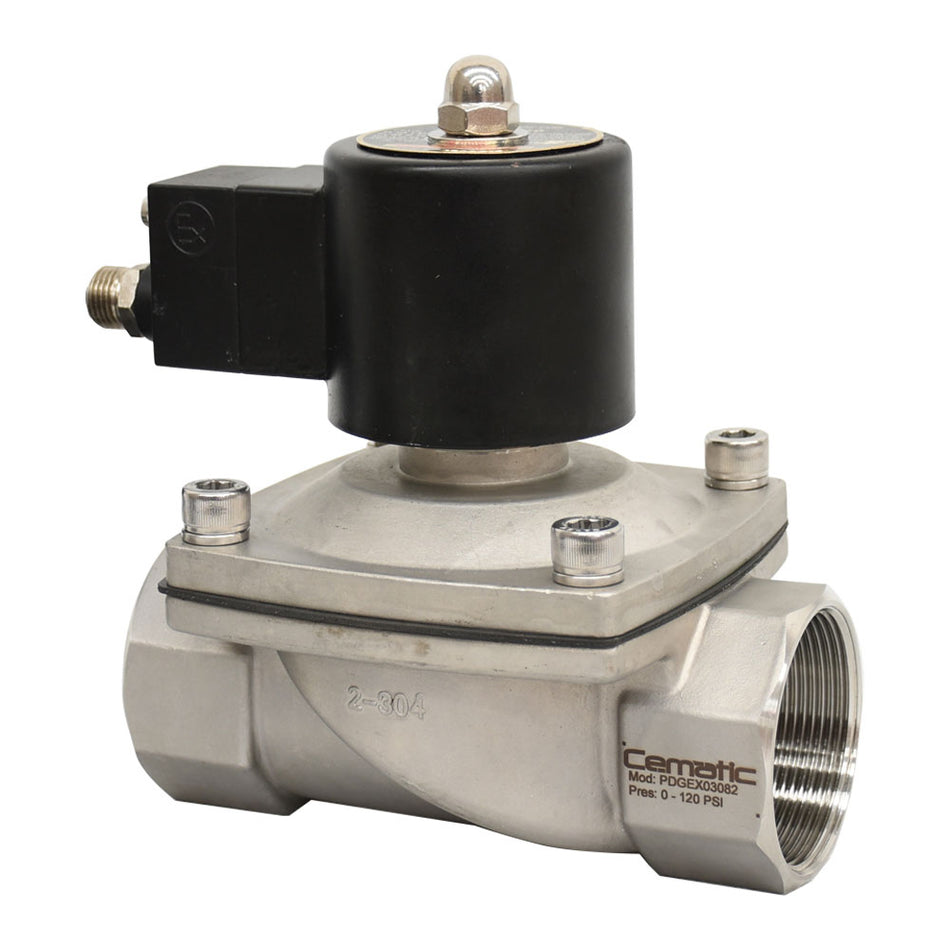
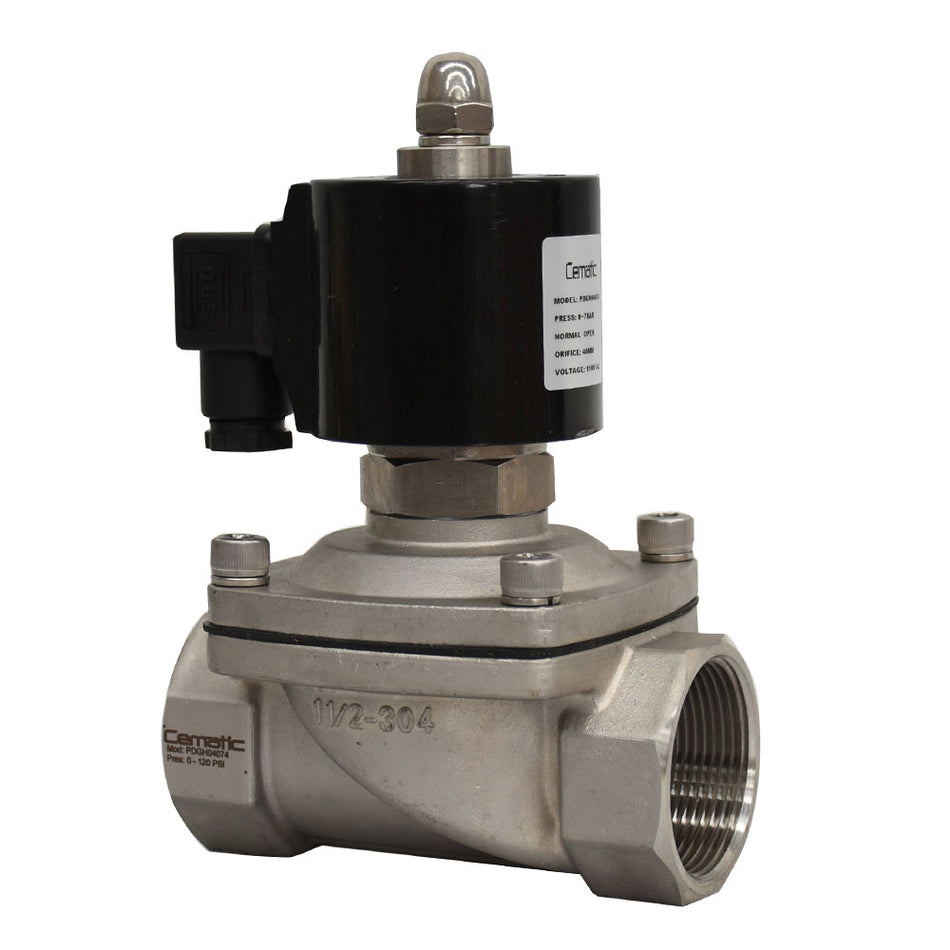
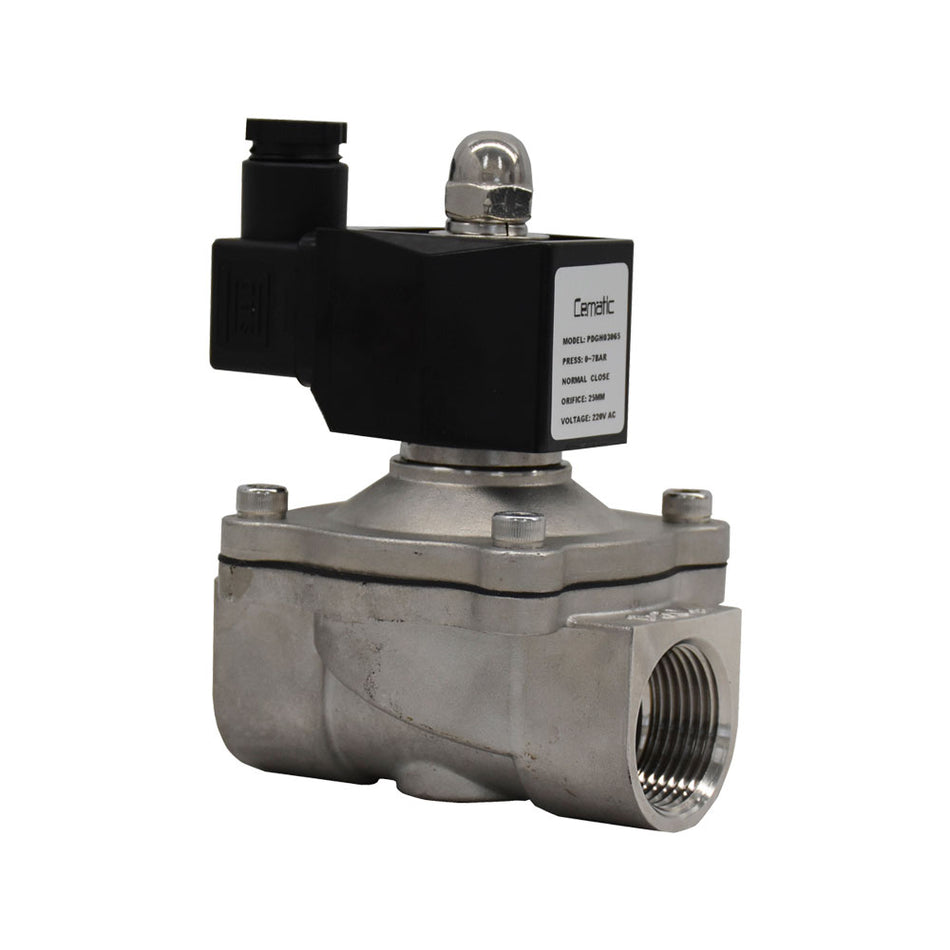
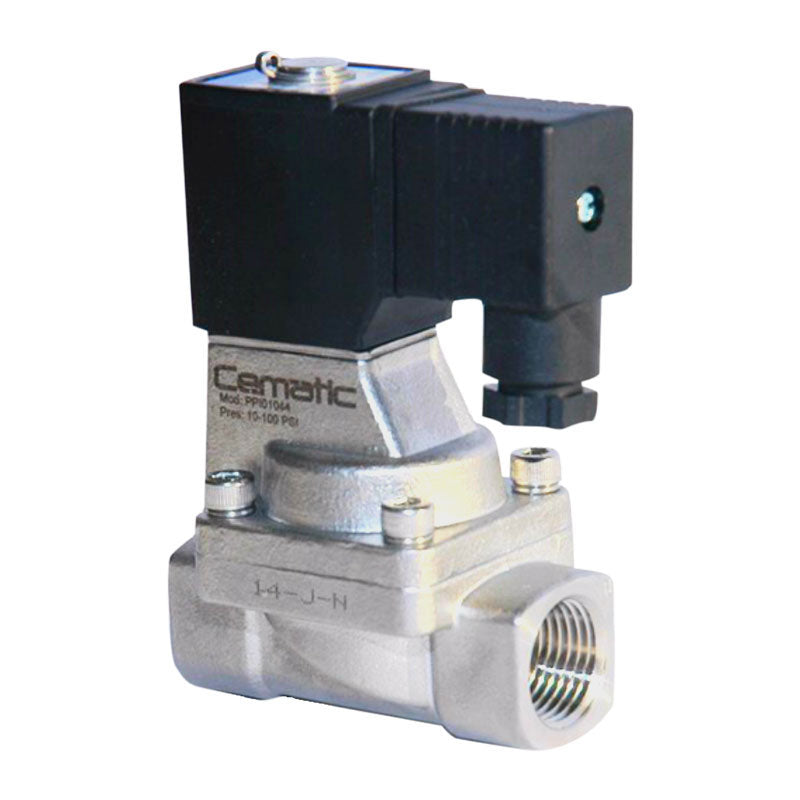



Process and Industrial Steam Valves — Correct Specification for Every Temperature, Pressure, and Application
As an industrial fluid, steam has no equivalent in versatility: it transfers thermal energy with high heat density, can be generated from demineralized water, and condenses, releasing its latent heat exactly where it is needed. For these reasons, steam is present in practically all industries in the country. But this very versatility of steam as a fluid implies an enormous diversity of operating conditions—from low-pressure steam at 110 °C in a laboratory autoclave to superheated steam at 540 °C and 170 bar in a power turbine—making it impossible to generically select "a steam valve." Each temperature and pressure range, each type of steam (saturated, superheated, wet, clean), and each valve function (isolation, regulation, automatic control) defines a specific type and material.
At Cematic, we supply steam valves in Mexico with the correct specification for each application: we advise on selecting the appropriate valve type, body material, stem seal material, and pressure rating for the exact conditions of your steam system. Stock available in Mexico City for high-turnover references. Complete technical documentation for maintenance and plant engineering.
Types of Steam and Their Conditions — The First Specification Decision
Before selecting any valve, it is necessary to identify the type of steam at the installation point:
| Steam Type | Typical Temperature | Typical Pressure | Main Applications |
|---|---|---|---|
| Low-Pressure Saturated Steam | 100–133 °C | 0–3 bar man. | Process fluid heating, HVAC, industrial kitchens |
| Medium-Pressure Saturated Steam | 133–184 °C | 3–10 bar man. | Food processing, pharmaceutical, sterilization, rubber curing |
| High-Pressure Saturated Steam | 184–212 °C | 10–20 bar man. | Power generation, high-temperature industrial processes |
| Superheated Steam | 212–540 °C | Any pressure | Power turbines, high-temperature refinery processes |
| Clean Steam | 121–134 °C | 1–3 bar man. | Pharmaceutical SIP sterilization, direct contact steam in food |
| Flash Steam | According to reduced pressure | Variable | Condensate recovery, steam expansion in traps |
The Most Common Mistake in Steam Valves — And How to Avoid It
The most frequent mistake in steam valve specification is selecting the wrong seal material for the operating temperature. The consequences range from sealing losses within weeks to catastrophic failures due to seat extrusion or stem packing destruction:
- EPDM: Compatible with saturated steam up to 180 °C (approximately 10 bar). Above this temperature, EPDM loses elasticity and permanently hardens, losing its sealing capability. It is the correct elastomer for low and medium-pressure steam in food, pharmaceutical, and general manufacturing processes.
- PTFE: Compatible with steam up to 220–230 °C. Above this temperature, PTFE begins to creep under mechanical load, causing gradual loss of seat sealing. Correct for medium-high pressure steam where EPDM is insufficient.
- Expanded Graphite (Grafoil): The standard stem packing material for high-pressure, high-temperature steam. Operates without degradation up to 450–500 °C and maintains sealing under the stem's thermal expansion cycles. Mandatory for any steam valve above 200 °C.
- Metal Seat (SS316 / Stellite): For superheated steam above 250 °C where no polymer can reliably maintain sealing. The metal seat requires higher operating torque than elastomeric but offers indefinite service life in high-temperature steam.
- NBR (nitrile) and Silicone: NEVER use in steam. NBR is destroyed by hydrolysis in the presence of hot water and steam. Silicone rapidly loses mechanical strength with saturated steam. They are compatible with oils and organic fluids but incompatible with hot water and steam.
Types of Steam Valves by Function
Angle Seat Valve — The Most Efficient for Automatic Steam Control
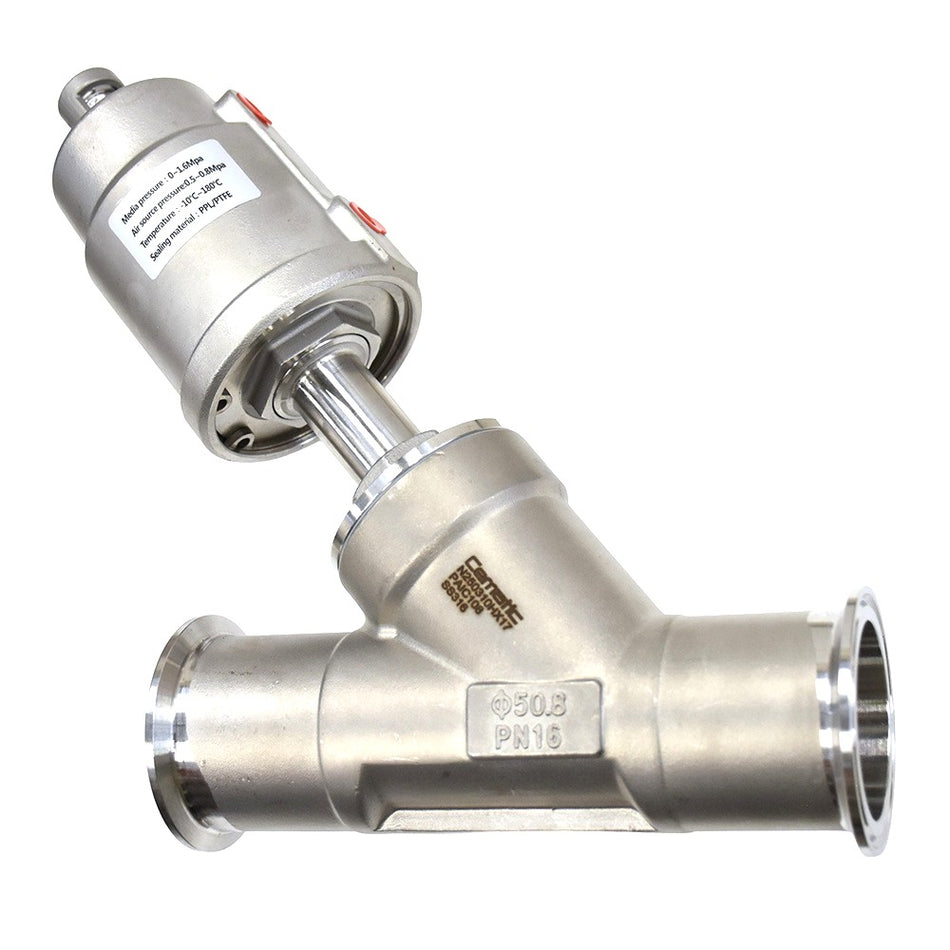
The angle seat valve with pneumatic actuator is the industry standard for automatic steam control in frequent cycles. Its angled plug design—instead of the perpendicular axis of a globe valve—generates a smoother flow path, lower pressure drop, and minimal seal wear even after millions of operating cycles with high-temperature steam. This is the valve that process machinery manufacturers—pasteurizers, autoclaves, paper machines, injection molding machines with steam heating—specify ex-factory for steam control in their equipment.
- Material: Stainless steel 316 (for clean, food, and pharmaceutical steam) or bronze (for low-pressure steam in general services)
- Seal: EPDM for steam up to 180 °C; PTFE for steam up to 220 °C
- Actuator: Single-acting pneumatic (normally closed or normally open) for ON/OFF operation or with positioner for modulating control
- Service life: Up to 5 million cycles in steam service with EPDM; up to 3 million with PTFE
- Diameters: DN10 to DN80 (⅜" to 3")
- Typical applications: Temperature control in pasteurizers, sterilizers, paper dryer cylinders, steam-heated molds, autoclaves, process heat exchangers
View full collection of angle and vertical seat valves →
WCB Gate Valve — High-Pressure, Large Diameter Isolation
For isolation of main high-pressure, high-temperature steam lines where the valve remains mostly in the fully open or fully closed position—and flow regulation is NOT its function—the carbon steel (WCB) gate valve is the industry standard. Its most valuable characteristic for steam service is the practically zero pressure drop in the fully open position: steam flow encounters no obstacles in its path, eliminating pressure-drop-induced condensation that occurs in partially open globe valves.
- Body Material: ASTM A216 WCB (carbon steel) for service up to 425 °C; ASTM A217 WC6 or WC9 (chrome-molybdenum) for temperatures up to 540 °C
- Stem Packing: Expanded graphite standard for high temperature — never PTFE in gate valves for high-pressure steam
- Design: Rising stem (OS&Y) for visual status verification; solid wedge or flexible wedge depending on service
- Pressure Classes: ANSI 150 (up to 19.6 bar at ambient temperature, reduced at high temperature), ANSI 300, ANSI 600, ANSI 900 and higher for very high-pressure steam
- Diameters: DN50 (2") to DN600 (24") and larger
- Applications: Steam distribution headers, live steam lines from boilers, process turbine isolation, control valve bypasses, block valves in power generation plants
- Standards: API 600 (design), API 598 (pressure testing), ASME B16.34 (pressure-temperature)
View full collection of gate valves →
Globe Valve — Manual Steam Flow Regulation
The globe valve is the regulation valve par excellence for steam service at points where fine flow adjustment is required without automation. Its flat or parabolic disc plug over an annular seat allows stable intermediate positions mechanically—something the gate valve cannot reliably do. The price of this regulation capability is a higher pressure drop than the gate valve, even in the fully open position, due to the change in flow direction inside the body.
- Material: WCB for moderate temperature steam; SS316 for clean steam; WC6/WC9 for high temperature
- Seat: Metal (SS316 or Stellite) for high-temperature steam; PTFE for steam up to 200 °C where higher tightness is required
- Connections: NPT threaded (DN15–DN50) for compact installations; ANSI 150/300 flanged for process lines
- Applications: Steam flow regulation in individual equipment, manual bypass of automatic valves, manual pressure reduction points, tank heaters with steam coils
SS316 Ball Valve — Pharmaceutical and Food Grade Clean Steam
Clean steam—generated from purified or deionized water in sanitary steam generators, without boiler water treatment additives—is the SIP sterilization fluid in the pharmaceutical industry and direct contact steam with food in the food industry. Valves for clean steam have additional requirements to conventional industrial steam: polished interior surface to prevent adherence, FDA-approved materials in all fluid-contact components, and hygienic connections (clamp or weldable) for inspection and cleaning.
- SS316L clamp or weldable ball valve (DN15–DN50): For isolation points of clean steam lines in pharmaceutical SIP systems. Body and ball in SS316L, high-temperature PTFE seats (resistant up to 220 °C for autoclave at 134 °C / 3 bar). Interior surface Ra ≤ 0.8 µm. Tri-Clamp connection for tool-free disassembly and inspection.
- SS316 clamp angle seat valve (DN15–DN50): For automatic clean steam control in pharmaceutical sterilizers and autoclaves where millions of operating cycles with steam at 134 °C are required. The pneumatic actuator allows integration with the sterilizer controller for automated heating, sterilization, cooling, and drying sequences.
- SS316L diaphragm valve for clean steam condensate (DN15–DN50): For handling clean steam condensate where complete drainage of the system without water retention zones is required.
Check Valve for Steam and Condensate
Check valves in steam systems have two critical functions: preventing steam return to the generator in case of pressure loss, and preventing condensate return to the steam pipes where it could cause water hammer.
- Flanged WCB swing check (DN25–DN300): For medium and high-pressure steam distribution lines. The swing disc opens with steam flow and closes by gravity with any pressure reduction. Graphite packing in the disc shaft for high-temperature operation.
- Threaded SS316 spring check (DN15–DN50): For clean steam and condensate lines in pharmaceutical and food installations. The spring ensures immediate closure with the slightest pressure reduction, regardless of installation orientation—critical in clean steam systems where pipe routing can be vertical, horizontal, or inclined.
Condensate — The Most Aggressive Fluid in a Steam System
Steam condensate is, paradoxically, one of the most aggressive fluids for pipes and valves in systems with poor boiler water quality. CO₂ dissolved in boiler water volatilizes with steam and recombines with condensate, forming carbonic acid (H₂CO₃) which can reduce the pH of the condensate to 4–5 in systems without adequate treatment. At this pH, condensate aggressively corrodes carbon steel.
Valves in condensate return lines must be considered in this context:
- Stainless steel 316: First choice for condensate return lines with pH < 6 or with known CO₂ corrosion. SS316 resists carbonic acid at typical condensate concentrations.
- WCB carbon steel with internal treatment: For condensate lines with good quality water (pH 8–9 with adequate boiler treatment) where the cost of stainless steel is not justified.
- SS316 angle seat valve: For condensate return control in condensate recovery systems. The SS316's resistance to carbonic acid and the angle seat valve's millions of cycles capacity make it the standard option in this service.
Valve Selection by Steam Pressure and Temperature Range
| Steam Condition | Function | Recommended Valve | Material / Seal |
|---|---|---|---|
| Saturated low pressure (≤ 10 bar / ≤ 180 °C) | Frequent automatic control | Pneumatic angle seat | SS316 / EPDM |
| Saturated low pressure (≤ 10 bar / ≤ 180 °C) | Infrequent manual isolation | SS316 ball or WCB gate | SS316 / PTFE or graphite |
| Saturated medium pressure (10–20 bar / 180–215 °C) | Frequent automatic control | Pneumatic angle seat | SS316 / PTFE |
| Saturated medium pressure (10–20 bar) | Main isolation | WCB ANSI 300 gate | WCB / Expanded graphite |
| Saturated high pressure (>20 bar / >215 °C) | Main isolation | WCB ANSI 300–600 gate | WCB / Graphite + 13Cr seat |
| Superheated (>250 °C) | Isolation / regulation | WC6/WC9 gate or globe | Cr-Mo / Graphite + Stellite |
| Clean steam SIP (134 °C / 3 bar) | Pharmaceutical isolation | SS316L clamp ball | SS316L / High-temperature PTFE |
| Clean steam SIP (134 °C / 3 bar) | Automatic sterilizer control | SS316 clamp angle seat | SS316 / PTFE + EPDM |
| Condensate return (≤ 180 °C) | Control / isolation | SS316 angle seat | SS316 / EPDM or PTFE |
| Acid condensate (pH < 6) | Isolation | SS316 gate or ball | SS316 / Graphite or PTFE |
Industries Served by This Category
Food and Beverage Industry
Steam is the universal heating fluid in food processing: UHT pasteurizers (indirect steam via plate heat exchangers), sausage cooking tunnels, canning sterilization retorts, heating of mixing tanks with steam coils, and CIP cleaning systems with hot water generated by direct steam injection. SS316 angle seat valves with EPDM are the standard in these applications due to their compatibility with sanitary regulations and resistance to continuous steam cycles at 5–10 bar.
Pharmaceutical and Biotechnology Industry
Clean steam is the reference sterilization agent in the pharmaceutical industry: it sterilizes autoclaves, bioreactors, water-for-injection (WFI) piping systems via SIP, and any equipment that comes into contact with sterile products. Clean steam valves in SS316L with clamp connections and FDA conformity documentation are the mandatory specification in this sector. Cematic supplies these valves with the material certificates and elastomer technical data sheets required by GMP validation protocols (IQ/OQ/PQ).
Manufacturing and Industrial Process
Steam cures rubber in the automotive industry (vulcanization presses at 150–180 °C / 6–10 bar), heats plastic injection molds, dries textile products, heats industrial spaces using heating coils, and provides heat to exchangers in hundreds of manufacturing processes. WCB gate valves for main headers and angle seat valves with pneumatic actuators for individual equipment control are the standard combination in these plants.
Power Generation
Steam turbines and combined cycles use steam at the most extreme conditions across the industrial spectrum. For valve requirements in power generation plants, please consult our specialized category: Valves for the Energy Sector →
Chemical and Petrochemical Industry
Steam is used as a heating medium in synthesis reactors, distillation columns, solution evaporators, and reboilers. In refineries and petrochemical plants, high-pressure steam (up to 40 bar) is also directly injected into cracking and reforming processes. WCB or Cr-Mo carbon steel gate valves and globe valves with Stellite trim are the standard under these conditions.
HVAC and Industrial Climate Control
Steam heating systems in industrial buildings, hospitals, hotels, and shopping centers use low-pressure steam (0.5–4 bar / 112–151 °C) for space heating via radiators, heating coils in air handling units (AHUs), and domestic hot water heaters. Bronze or SS316 angle seat valves with EPDM are standard for automatic control of these circuits from thermostats or building management systems (BMS).
Safety Considerations in Steam Systems
Pressurized steam stores potential energy that can be catastrophic if released uncontrollably. Incorrect valve selection in steam systems is not just a maintenance problem — it can be a safety risk for personnel:
- Never use conventional ball valves with PTFE seats above 180 °C: PTFE creeps under seat load at high temperatures, gradually losing its seal until the leak becomes uncontrollable. In 15 bar steam, a seat leak is not a minor maintenance issue — it's a 198 °C steam emission that can cause severe burns.
- Always check the pressure rating at the operating temperature: The ANSI 150 rating of a WCB valve (19.6 bar at ambient temperature) is reduced to 12.1 bar at 250 °C and 6.9 bar at 425 °C. A valve specified at its maximum nominal pressure may be undersized for the actual operating temperature of the system.
- Always purge steam before intervention: Steam valves must have purge lines or double isolation that allow the section to be fully depressurized before any maintenance intervention.
- Trapped condensate causes water hammer: Steam lines must have proper condensate drainage via steam traps at low points. Partially open globe or gate valves in wet saturated steam lines can accumulate condensate which, when entering the main steam line, generates water hammer with impact pressures that can exceed 100 times the normal working pressure.
Why choose Cematic for your steam valves?
We have available stock in Mexico City for the most popular references: SS316 angle seat valves with EPDM and PTFE in the most demanded diameters, WCB flanged gate valves ANSI 150 and 300, WCB threaded and flanged globe valves, and SS316 ball valves for clean steam. We advise on the selection of the correct type, seal material, and pressure rating for the exact conditions of your steam system. We warn when the requested specification is not suitable for the declared operating conditions — we prefer to lose a sale rather than have an incorrect valve cause an accident or a plant shutdown. Technical quote the same business day. Shipments nationwide. Contact us via WhatsApp or at ventas@cematic.com.