
26Products






Valves for Drinking Water, Treatment, and Wastewater — The Complete Water Cycle in Mexico
Mexico faces one of the continent's most complex water challenges: unequal water distribution between regions, distribution infrastructure with physical losses of up to 40% in some municipal networks, and the need to treat industrial and municipal effluents before discharge into water bodies. In this context, valves are not secondary components of water infrastructure — they are the control points that determine whether water reaches its final destination with the correct quality, pressure, and flow, and whether effluents are efficiently treated before being discharged.
Cematic supplies valves for the Mexican hydraulic sector in all its diversity: municipal and state operating agencies (SACMEX, SAPAL, SIAPA, JAPAC, and similar), drinking water and wastewater treatment plants, agricultural and technical irrigation systems, industries with process water demand, and building and commercial infrastructure construction with hydraulic systems. We advise on the selection of the correct material —ductile iron for main networks, PVC for secondary installations, stainless steel for applications where metallic contamination is unacceptable— and on compliance with applicable Mexican and international standards.
Standards and certifications for water valves in Mexico
The selection of valves for drinking water is not unregulated — it is governed by standards that define which materials can be in contact with water consumed by the population:
- NOM-001-CONAGUA: Establishes the minimum water quality requirements for human use and consumption, and by extension, the acceptable materials for components in contact with drinking water in distribution systems. Valve materials must not release toxic substances into the water or alter its organoleptic characteristics (taste, smell, color).
- NSF/ANSI 61 — Drinking Water System Components: The international benchmark US certification for components in contact with drinking water. Valves with NSF/ANSI 61 certification have been tested to verify that they do not release contaminants into the water above established limits. Required in export projects, international systems, and increasingly frequent in bids from modern Mexican operating agencies.
- AWWA (American Water Works Association): AWWA standards (C504 for butterfly, C500 for gate, C508 for check) define the design, material, testing, and marking requirements for valves in drinking water distribution. They are the de facto standard in water infrastructure projects in Mexico and a common reference in engineering specifications from CONAGUA, BANOBRAS, and projects with IDB or World Bank financing.
- NOM-010-CONAGUA: Technical specifications for drinking water, sewerage, and sanitation systems. Defines material and construction requirements for pipes and fittings in distribution networks, including valves.
- NOM-127-SSA1: Water quality standard for human consumption — defines maximum permissible contaminant limits. Valves in contact with drinking water must not contribute to exceeding these limits due to leaching of heavy metals or other substances.
Types of valves for the water sector — selection by application
Gate Valves — The Standard for Municipal Distribution
The ductile iron gate valve is the most commonly used isolation valve in drinking water distribution networks in Mexico. Its resilient wedge design —coated with vulcanized EPDM that seals both at the seat and at the bottom of the body— guarantees bidirectional tightness even with slight incrustations on the seat, without the need for metallic seats that accumulate lime and carbonates.
- Ductile iron gate with EPDM wedge — non-rising stem (NRS): The standard for underground installation in distribution networks. The stem does not rise during operation, allowing installation in valve chambers with limited height and operation with a T-key from the surface without excavation. Available with stem extension for installation depths of 1 to 4 meters. NSF/ANSI 61 certified in the most demanded models.
- Ductile iron gate with rising stem (OS&Y): For surface installations (water treatment plants, pumping stations, treatment plants) where visual verification of valve status is an operational safety requirement. The visible stem unequivocally indicates whether the valve is open or closed — without the need for additional instrumentation.
- Available diameters: DN80 (3") to DN600 (24") standard in ductile iron for municipal networks.
Butterfly Valves — Large Diameter Control in Plants and Main Networks
For diameters larger than DN200 where the gate valve becomes excessively heavy and expensive, the ductile iron butterfly valve with EPDM seat is the standard alternative in water infrastructure. Its weight, up to 10 times less than the equivalent gate valve, and its quarter-turn operation make it ideal for frequent control points in treatment plants and pumping stations.
- Ductile iron wafer butterfly with EPDM (DN50–DN1200): For isolation and control in main pipelines, treatment plants, pumping stations, and pressure regulation systems. The vulcanized EPDM seat is resistant to residual chlorine in drinking water (up to 5 mg/L) and chlorinated disinfection solutions used in plants. NSF/ANSI 61 certified in selected models.
- Butterfly with gear operator (DN400 and larger): For diameters where the operating torque exceeds the capacity of a manual lever. The gear operator allows safe operation of large diameter valves with minimal operator effort. Available with electric actuator for remote operation from the network control center or SCADA of the operating agency.
- Butterfly with electric actuator and Modbus communication: For integration with SCADA systems of modern operating agencies. Remote operation of strategic valves in the network —zone isolation valves, reservoir inlet valves, and pressure regulating valves— allows responding to emergencies without personnel on site.
Ball Valves — High Purity Drinking Water and Secondary Installations
- SS316 NPT threaded ball (DN15–DN100): For purified water, reverse osmosis water, process water in the food and beverage industry, and service points in laboratories and hospitals where metallic contamination from iron or brass is unacceptable. The 316 stainless steel ball does not generate corrosion or modify water characteristics.
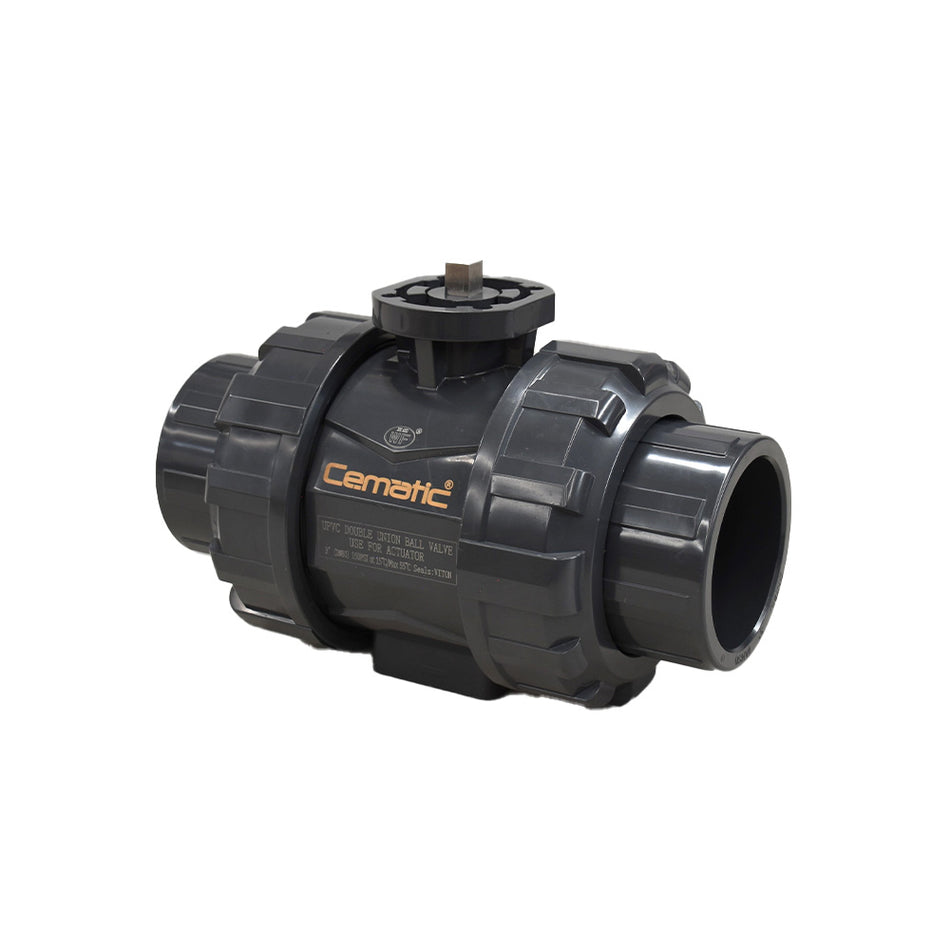
- PVC union ball (DN15–DN100): For drinking water installations where weight, metal corrosion, or cost are determining factors. Resistant to residual chlorine in typical network water concentrations (0.2–2 mg/L). Installation by welding or threading without special tools.
- Flanged ductile iron ball (DN50–DN200): For drinking water service at medium pressures when the Class VI tight shut-off of the ball is required with the standard flanged dimensions of municipal water infrastructure.
Check Valves — Pump Protection and Cross-Contamination Prevention
Check valves are the most important passive safety component in water pumping systems. Their failure generates two critical consequences in the water sector: the destruction of process pumps by backflow, and cross-contamination between network sectors operating at different pressures.
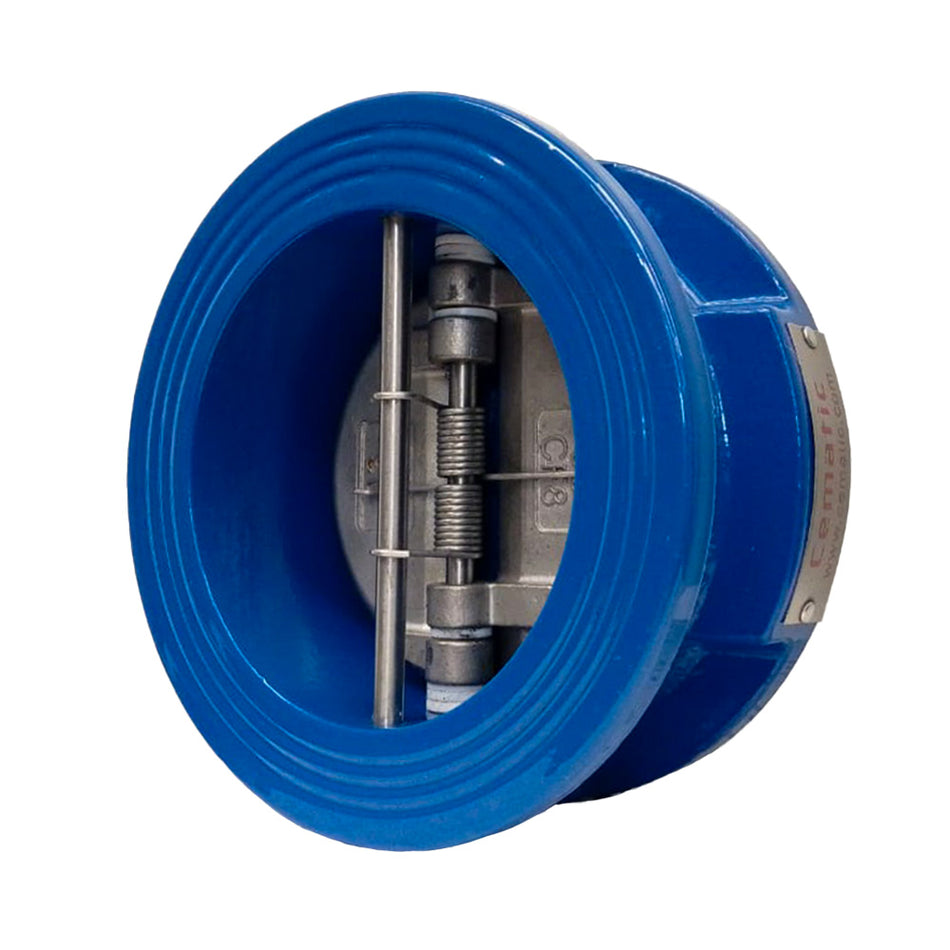
- Ductile iron dual plate check (DN80–DN600): The most reliable solution for pump protection in drinking water and wastewater pumping stations. The soft closure of the two half-plates without water hammer is critical in installations where the impact of backflow could fracture connections in old networks with asbestos cement or gray cast iron pipes.
- Flanged ductile iron swing check (DN80–DN400): For low and medium power pumping stations where cost is prioritized over closing speed. Simple design and low maintenance.
- PVC or bronze foot valve (DN25–DN150): For maintaining priming in pump suction systems in wells, cisterns, and tanks. The foot valve keeps water in the suction pipe when the pump stops, allowing immediate start-up without manual priming.
- SS316 spring check (DN15–DN50): For installation in any position in purified water lines, reverse osmosis, and recirculation systems in buildings. The spring function ensures closure in the event of any pressure reduction regardless of pipe orientation.
PVC Valves — The Economic Solution for Water in Secondary Installations and Irrigation
- PVC True Union ball (DN15–DN100): For secondary drinking water installations, agricultural and technical irrigation systems, aquaculture, and fish farming where cost and weight are determining factors. Resistant to chlorine and liquid fertilizers in typical fertigation concentrations.
- PVC wafer butterfly (DN50–DN300): For water flow control in large-scale irrigation systems, water parks, and water distribution systems in rural communities where total installation cost is the main criterion.
- PVC check (DN15–DN100): For suction lines and pump protection in low-pressure water systems. The most economical alternative for water wells and rural pumping systems.
Applications by water system
Drinking Water Treatment Plants (DWTP)
Water treatment plants use a sequence of processes —coagulation, flocculation, sedimentation, filtration, and disinfection— to transform raw water from rivers, dams, or aquifers into water suitable for human consumption. Valves in DWTPs must comply with NSF/ANSI 61 at all contact points with water after coagulant dosing.
- Ductile iron EPDM butterfly with electric actuator: For inlet and outlet control of clarifiers, filters, and chlorine contact tanks. Operation from the central plant operator panel allows adjusting filtration and backwash times without personnel on site.
- SS316 ball with pneumatic actuator: For dosing coagulant (aluminum sulfate, polyaluminum chloride), lime, and chlorine at the addition points to raw water. The total tightness of the ball prevents reagent dripping between dosing cycles.
- Ductile iron dual plate check: Protection of low and high-pressure pumps in the different stages of the plant and in the discharge to the distribution network.
- Ductile iron NRS gate with stem extension: For isolating plant sections during filter maintenance, clarifier washing, and chlorine contact tank cleaning.
Wastewater Treatment Plants (WWTP)
Municipal and industrial WWTPs treat wastewater through physical (screens, grit chambers, clarifiers), biological (activated sludge, biofilters, stabilization ponds), and in some cases chemical (coagulation, disinfection) processes before discharge to the receiving body in accordance with NOM-001-SEMARNAT-2021.
- Knife gate valve with rubber liner (DN100–DN600): For flow control of raw wastewater, primary sludge, and digested sludge containing suspended solids that would obstruct any conventional seat valve. The cutting action of the knife is indispensable in thickened sludge and dewatered sludge lines. View knife valve collection →
- Ductile iron butterfly with electric actuator (DN200–DN1200): For influent, effluent, and activated sludge recirculation control in biological reactors. The large flows of municipal WWTPs require the large passage openings of the butterfly valve at a reasonable cost.
- Ductile iron gate valve (DN80–DN600): For isolating sludge tanks, drying beds, and plant sections during preventive maintenance. The EPDM resilient wedge resists wastewater and sludge without seat corrosion.
- Ductile iron dual plate check (DN100–DN800): Protection of raw wastewater lifting pumps and sludge recirculation pumps in WWTP pumping stations. Soft closing is especially important in wastewater with solids that could damage valve faces during abrupt closure.
- SS316 ball with pneumatic actuator (DN15–DN100): For dosing disinfection reagents (sodium hypochlorite, UV + peroxide), coagulants, and nutrients in tertiary treatment stages.
Municipal Distribution Systems and Operating Agencies
- Ductile iron NRS gate with stem extension: Standard for isolation valves in distribution networks installed at depths of 0.6 to 3 meters. The stem extension allows operating the valve from the surface with a T-key without the need for excavation. Cap with standard CONAGUA square for operating agency keys.
- Ductile iron butterfly with gear operator (DN400–DN1200): For main pipelines between reservoirs, regulating tanks, and pressure zones. Gear operation allows a single operator to control large diameter valves without the risk of water hammer due to abrupt closure.
- Pressure regulating valve (PRV) — HP butterfly with positioner: For automatic pressure regulation in the pressure zones of the distribution network. The high performance butterfly valve with electropneumatic positioner allows maintaining delivery pressure within the range established by the standard (7–50 m.c.a. according to NOM-010-CONAGUA) regardless of demand variations in the network.
- Fire hydrant valve: Quick isolation valves in fire water networks in accordance with NFPA 24 and NOM-002-STPS. The OS&Y gate with rising stem is the standard for these applications due to its code-mandated visual open status verification.
Agricultural and Technical Irrigation
Irrigated agriculture consumes 76% of the water extracted in Mexico (CONAGUA). Water use efficiency —measured by distribution uniformity and loss reduction— directly depends on the quality of control valves in drip, sprinkler, center pivot, and gravity irrigation systems.
- PVC wafer butterfly valve (DN50–DN200): For irrigation manifold control and distribution between drip or sprinkler irrigation sectors. PVC resists fertigation fertilizers and disinfection chlorine for drippers without corrosion or calcareous incrustations that contaminate the water.
- PVC True Union ball valve with 24 VDC electric actuator: For automating irrigation sectors using programmers or agricultural PLCs. The 24 VDC electric actuator operates directly from the irrigation controller battery without the need for an electrical grid in the field — ideal for solar irrigation systems.
- Ductile iron gate valve (DN100–DN600): For isolating main conduction channels in gravity irrigation systems. Infrequent operation (opening at the beginning and closing at the end of the season) and large diameters make the gate valve the most suitable and economical option.
- PVC foot check valve (DN25–DN100): For groundwater abstraction wells in irrigation systems. Maintains priming of the suction pipe between pumping periods, avoiding the need to re-prime the pump at each start-up.
Buildings and Commercial Facilities
- SS316 or PVC ball valve (DN15–DN50): For plumbing installations in residential, commercial, and office buildings. Service points, pressure risers, meters, and equipment connections.
- Iron butterfly valve with electric actuator (DN100–DN400): For water control in HVAC systems, cooling towers, and chilled water circuits in commercial buildings. Integration with BMS (Building Management System) via BACnet or Modbus protocol for centralized control.
- Ductile iron gate valve (DN80–DN300): For isolating main feeds in machine rooms, cisterns, and constant pressure systems in high-rise buildings.
Quick selection guide by application
| Application | Recommended valve | Standard material |
|---|---|---|
| Municipal distribution network (DN80–DN600) | NRS gate with stem extension | Ductile iron + EPDM wedge |
| Main pipeline (DN400–DN1200) | Butterfly with gear operator or actuator | Ductile iron + EPDM seat |
| High purity drinking water / SS | NPT threaded ball | 316 Stainless steel |
| Secondary installations / irrigation | PVC ball or butterfly | PVC + PTFE/EPDM |
| Pump protection (DN80–DN600) | Dual plate check | Ductile iron |
| Suction wells | Foot valve | PVC or bronze |
| WWTP sludge | Knife valve with rubber liner | Iron + EPDM/neoprene liner |
| Raw wastewater | Iron gate or knife valve | Ductile iron + EPDM |
| Chlorine / reagent dosing | SS316 ball with pneumatic actuator | SS316 + PTFE |
| Network pressure regulation | HP butterfly with positioner | SS316 or iron + PTFE seat |
The problem of chlorine in potable water valves
Residual chlorine is the most common disinfectant used in potable water systems in Mexico — concentrations of 0.2 to 1.5 mg/L are typical in distribution networks, and up to 5 mg/L at the plant outlet. Although these concentrations are safe for human consumption, they have significant effects on valve materials:
- Iron and carbon steel: Corrode in the presence of chlorinated water, releasing iron oxides that color the water. Unacceptable for contact with potable water without internal coating.
- Ductile iron with epoxy coating: The standard for potable water valves. The internal sanitary epoxy coating (NSF/ANSI 61 approved) protects the iron from direct contact with chlorinated water and meets the non-contamination requirements for potable water.
- EPDM: Excellent resistance to chlorine at network concentrations (up to 5 mg/L). It is the standard elastomer for seats and gaskets in potable water valves.
- NBR (nitrile): Not recommended for chlorinated water — chlorine degrades NBR over time, causing hardening and loss of elasticity of the seat.
- PTFE: Excellent resistance to chlorine at any concentration. Used in ball valve seats for high-concentration chlorinated water.
- PVC: Excellent resistance to chlorine in potable water concentrations. One of the main reasons for its widespread use in water installations.
- Stainless steel 316: Resistant to chlorine at typical potable water concentrations. At concentrations above 200 mg/L (high-concentration disinfection), pitting can occur — check with compatibility chart.
Valve automation in water infrastructure
The modernization of water operators in Mexico involves telemetry and SCADA control of their distribution networks: real-time pressure and flow monitoring, leak detection by pressure correlation, and remote control of strategic valves for pressure zone management and emergency response. Cematic's valve automation components integrate with the most commonly used systems in the Mexican water sector:
- Electric actuator with Modbus RTU / TCP: For direct integration with telemetry RTUs and SCADA systems of operating bodies. Standard protocol compatible with all water network management systems (WaterGEMS, InfoWater, proprietary telemetry systems).
- 24 VDC electric actuator with solar panel: For valve automation in remote points of the network without access to electrical power — rural wells, sectioning valves in open fields, and solar pumping stations.
- Pneumatic actuator with solenoid for PTAP and PTAR: In plants with a compressed air network, the pneumatic actuator offers faster response speed and lower cost than electric actuators for frequent process valve operation cycles.
- Electropneumatic positioner for PRVs: The automated pressure regulating valve with a 4-20 mA positioner allows proportional pressure control in network zones, replacing mechanical pressure reducers with active control systems that maintain delivery pressure within the regulatory range regardless of demand variations.
Clients and projects we serve in the water sector
- Municipal and state operating bodies: SACMEX (Mexico City), SAPAL (Guanajuato), SIAPA (Guadalajara), JAPAC (Culiacán), OOMAPAS (Sonora), CEA (Jalisco), CAEM (State of Mexico) and similar throughout the country
- CONAGUA and river basin organizations: Federal water infrastructure projects — treatment plants, aqueducts, and conduction systems
- Construction and project engineering firms: ICA, PINFRA, IDEAL, ACCIONA and construction companies specializing in hydraulic civil works
- Industries with high water demand: Beverage, food, paper, chemical, and manufacturing plants with their own collection and treatment systems
- Agriculture and agribusiness: Irrigation user associations, agricultural companies with technified irrigation systems and packing plants with process water systems
- Real estate developers and building contractors: Plumbing installations in residential, commercial, and hospital projects
Why choose Cematic for your water valves?
The water sector in Mexico operates with tight budgets and demands maximum value for money invested. At Cematic, we combine stock availability in Mexico City with the technical advice needed to correctly specify each valve — avoiding the hidden cost of undersized valves, with unsuitable materials for chlorine, or without the certifications required by applicable standards. We issue a formal technical quote the same business day with detailed material specifications, applicable standards, and available documentation. Shipments throughout the Mexican Republic. Contact us via WhatsApp or at ventas@cematic.com.