
17Products






Valves for the Chemical and Petrochemical Industry — Correct Selection for Each Fluid, Temperature, and Installation Area
Valve selection in the chemical industry does not allow for generalities. Concentrated sulfuric acid at 80°C will destroy a stainless steel valve in weeks that would last decades in a water line. An aromatic hydrocarbon at high pressure requires an API 6D design with a Fire Safe seal that no standard process valve can provide. An area classified as Hazardous Area Zone 1 requires actuators with ATEX Ex certification that are not interchangeable with standard actuators. At Cematic, we understand these differences and offer the complete range of valves for the chemical industry in Mexico, with specialized technical advice to identify the correct solution for each point in your process.
The four technical challenges of the chemical industry — and how to solve them
Challenge 1: Chemical Corrosion
Corrosion is the number one cause of premature valve failure in chemical plants. The correct material for the valve body depends on the specific fluid, its concentration, temperature, and flow rate:
- Concentrated mineral acids (H₂SO₄, HCl, HNO₃, HF): Stainless steel 316 is not sufficient for high-concentration acids. The solution is an anti-corrosive valve with a PFA (Perfluoroalkoxy) inner lining — a fluoropolymer with virtually universal chemical resistance that acts as an inert barrier between the fluid and the metal body. For hydrofluoric acid (HF) and fuming nitric acid, PFA is the only reliable option.
- Strong alkalis (NaOH, KOH) at high concentration: Stainless steel 316 resists caustic soda at moderate concentrations and temperatures, but at concentrations above 50% or elevated temperatures, intergranular corrosion can occur. The anti-corrosive valve with PTFE or PFA lining is the safe alternative for any concentration and temperature within the fluoropolymer's range.
- Organic solvents (toluene, xylene, acetone, DMF, chlorinated solvents): Stainless steel 316 resists most organic solvents well. Seats should be specified as PTFE or Viton (FKM) — EPDM and NBR are incompatible with organic solvents and degrade rapidly.
- Strong oxidizers (chlorine gas, concentrated H₂O₂, peroxides): PFA lining is mandatory. PTFE can be attacked by certain very aggressive oxidizers (elemental fluorine, perchloric acid) — consult specific compatibility table.
- Moderately corrosive fluids (diluted acids, saline solutions, process water): Stainless steel 316 with PTFE seats is sufficient and significantly more economical than PFA lining. The key is not to over-engineer — a PFA anti-corrosive valve in a diluted acetic acid line is an unnecessary expense.
Challenge 2: Elevated Temperature and Pressure
Chemical processes frequently operate at temperatures and pressures outside the range of standard process valves:
- High temperature (150 °C to 400 °C+): PTFE and EPDM seats fail above their thermal limits. High-temperature valves require metal seats (SS316 with Stellite or tungsten carbide coating) and expanded graphite (Grafoil) stem packing that maintains sealing at temperatures above 300 °C. The body material must also be specified for high temperature: carbon steel WCB up to 425 °C, chrome-molybdenum (WC6, WC9) up to 540 °C, austenitic stainless steel for cryogenic service down to -196 °C.
- High pressure (more than ANSI 150): Standard process valves are designed for ANSI 150 (PN20, up to 19.6 bar at ambient temperature). For higher pressures, valves in ANSI Class 300 (up to 50 bar), ANSI Class 600 (up to 100 bar) or higher are required, with thicker bodies and greater mechanical strength certified under ASME B16.34. Trunnion ball valves are the standard solution for high-pressure isolation in large diameters.
- Vacuum: Distillation, evaporation, and lyophilization processes operate below atmospheric pressure. Valves must be designed to withstand external pressure without deformation — a condition that not all standard designs meet. Specify "vacuum service" explicitly when quoting.
Challenge 3: Safety in Classified Zones (ATEX)
Chemical plants that handle solvents, hydrocarbons, flammable gases, or combustible dusts have areas classified as Hazardous Zones where an electrical spark can initiate an explosion. In these zones, all electrical equipment — including valve actuators — must be certified under the ATEX directive (94/9/EC in Europe, equivalent NEC in the USA):
- Zone 0 / Zone 20: Explosive atmosphere continuously present. Requires Category 1G (gases) or 1D (dusts) equipment — extremely restrictive.
- Zone 1 / Zone 21: Explosive atmosphere likely in normal operation. Requires Category 2G or 2D equipment. Most ATEX actuators available on the market are Category 2G — Ex d (explosion-proof enclosure) or Ex ia (intrinsic safety).
- Zone 2 / Zone 22: Explosive atmosphere unlikely, only under abnormal conditions. Requires Category 3G or 3D equipment — the least restrictive.
The pneumatic actuator is intrinsically safer in ATEX zones than the electric one: by not having electrical components in the actuator body (only in the control solenoid, which can be low-cost ATEX), it is the solution with the least complexity and total cost for automation in classified zones. Cematic supplies ATEX Ex II 2G solenoids certified for Zone 1 with direct mounting on the NAMUR port of the standard actuator.
Challenge 4: Process Safety — Fire Safe and Double Block and Bleed
In lines with flammable, toxic, or high-pressure fluids, international standards and industrial insurance regulations require additional safety features that go beyond a standard process valve:
- Fire Safe Design (API 607 / BS 6755): In case of fire, the polymeric gaskets and seats of the valve can be destroyed. Fire Safe design incorporates secondary metal seals that maintain the tightness of the valve even when the primary PTFE or EPDM seals have been destroyed by fire, preventing the valve from becoming an additional source of fire fuel.
- Double Block and Bleed — DBB (API 6D): Independent sealing on both seats plus a bleed port in the central cavity. Allows complete isolation of a line section and verification of isolation by bleeding the cavity — the safety standard for intervention in high-pressure or hazardous fluid lines.
- Anti-static: Electrical continuity guaranteed between ball, stem, and body to dissipate electrostatic charges generated by the flow of flammable fluids — required in hydrocarbon and flammable solvent lines.
Types of valves for the chemical industry by application
For Shut-off and ON/OFF Isolation
- PFA anti-corrosive ball valve (DN15–DN150): For acids, strong alkalis, and aggressive solvents in small and medium diameters. Class VI tight shut-off, continuous PFA lining without gaskets. View anti-corrosive collection →
- SS316 NPT threaded ball valve (DN15–DN100): For moderately aggressive fluids, organic solvents, and process water. The most economical solution for general chemistry.
- SS316 flanged ball valve ANSI 150/300 (DN25–DN200): For main process lines with higher pressure or diameter.
- Trunnion ball valve WCB or SS316 (DN50–DN600, ANSI 150–1500): For high pressure and large diameters. DBB and Fire Safe available. View trunnion collection →
- Gate valve WCB or SS316 flanged (DN50–DN600): For isolation of plant sections with low operating frequency and minimal pressure drop required. View gate valve collection →
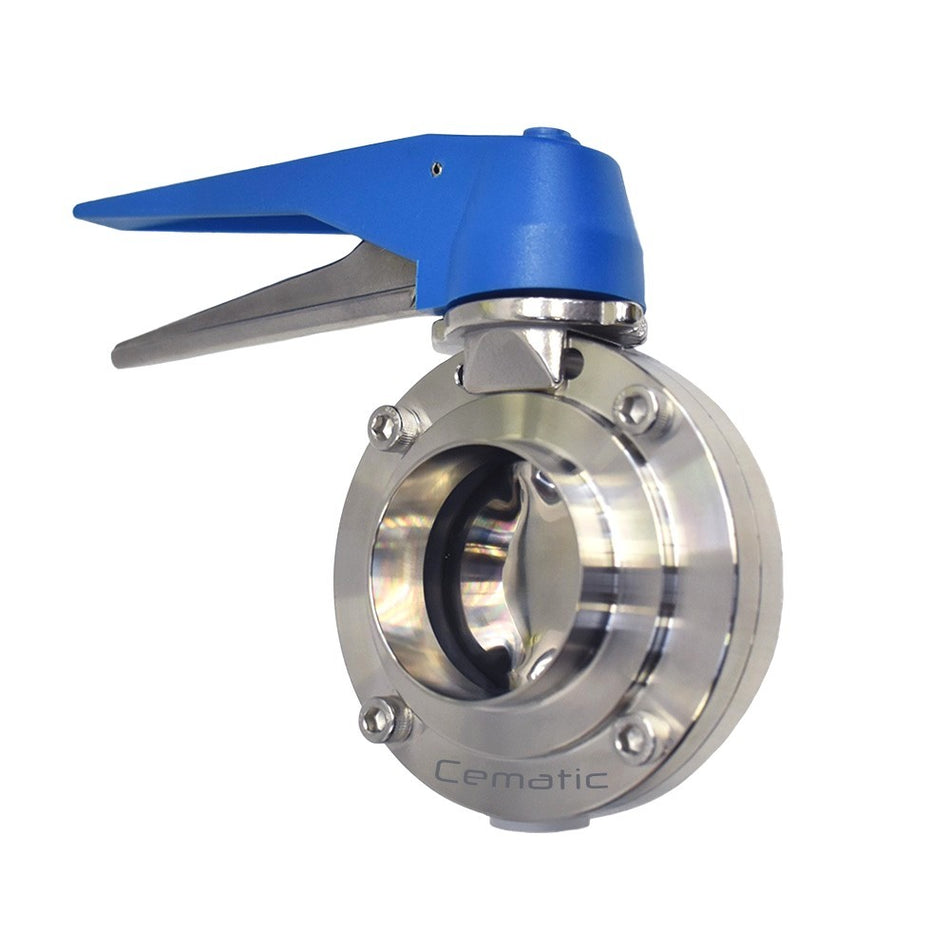
- PFA lined anti-corrosive butterfly valve (DN50–DN400): For moderately corrosive fluids in large diameters where an anti-corrosive ball valve would be excessively expensive.
- Knife gate valve (DN50–DN600): For fluids with suspended solids, process slurries, and abrasive mixtures where other valves would clog. View knife gate valve collection →
For Flow Control and Regulation
- V-port segmented ball valve — SS316 (DN50–DN200): For modulating control of fluids with solids, slurries, pulps, and viscous mixtures. Equal percentage characteristic, rangeability 200:1, metal seat. View product →
- High-performance butterfly valve with positioner: For proportional control in large diameters at a lower cost than an equivalent globe valve.
- Anti-corrosive diaphragm valve: For aggressive fluids with particles where proportional control is required without contact between the mechanism and the fluid.
For Reverse Flow Prevention
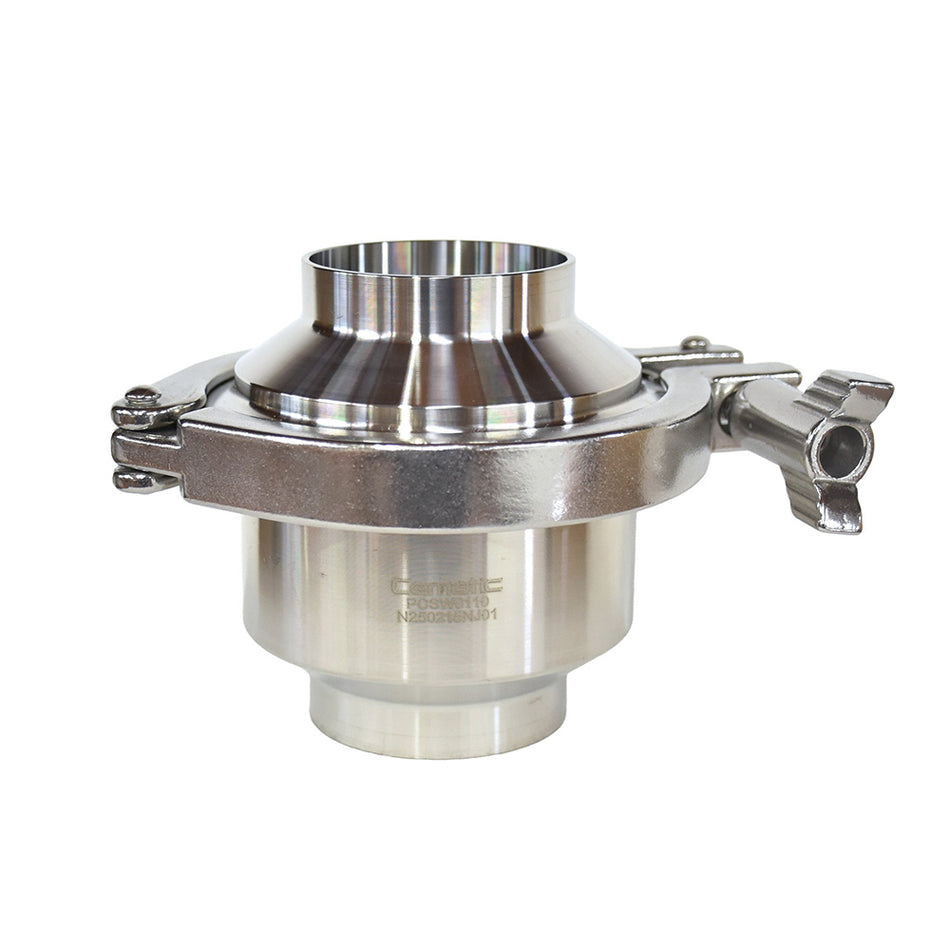
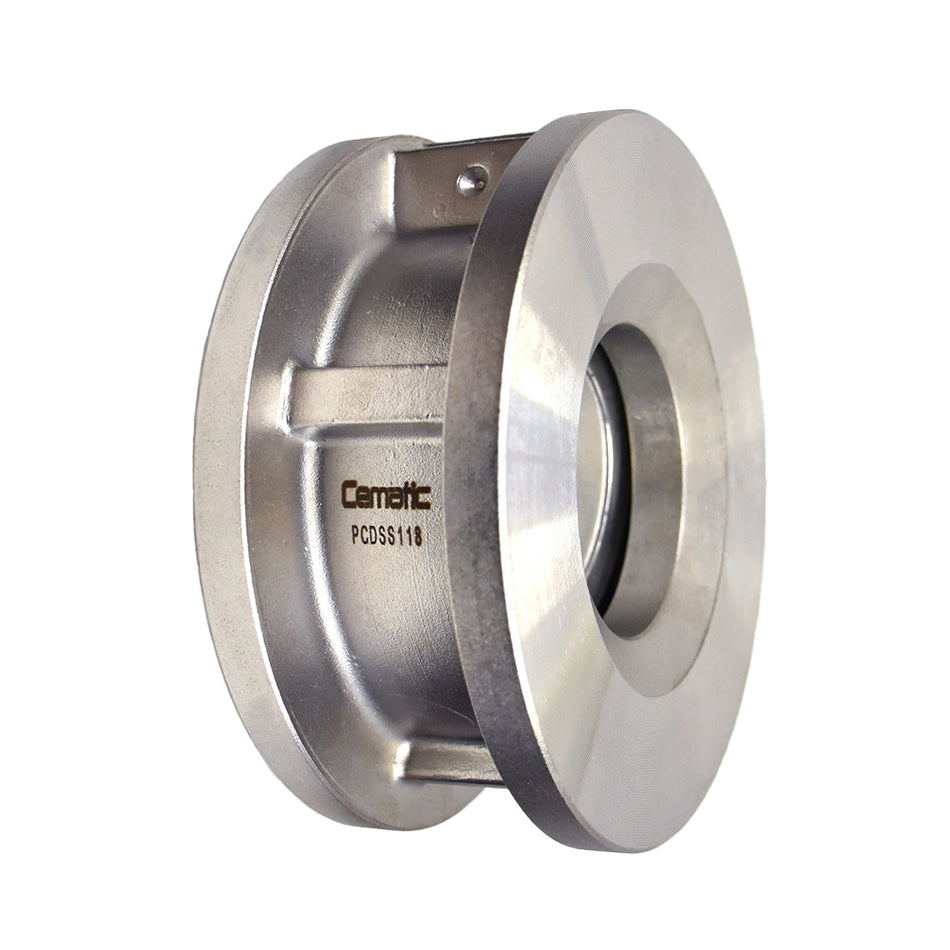
- Double plate check valve SS316 or WCB: Protection of pumps and compressors in chemical process lines. No external moving parts, smooth closing without water hammer. View check valve collection →
- PFA anti-corrosive check valve: For acid and alkali lines where a conventional check valve would corrode in weeks.
Automation in the chemical industry — specific requirements
- Pneumatic actuator + ATEX solenoid: The standard configuration for automation in classified zones Zone 1 and Zone 2. The pneumatic actuator itself does not require ATEX certification (it has no electricity in its body). Only the control solenoid needs to be Ex certified. Result: safe automation at a significantly lower cost than a complete ATEX electric actuator.
- ESD (Emergency Shutdown) Systems: Isolation valves that close automatically upon an emergency signal from the gas, pressure, or temperature detection system. They require single-acting actuators with fail-safe (normally closed) and guaranteed response times. The package includes a high-flow solenoid for fast closing and periodic partial stroke testing (PST) to verify functionality without stopping the process.
- HART digital positioner for control loops: For control valves in PID temperature, pressure, flow, and level loops. The digital positioner provides real-time diagnostics of the valve status — critical in chemical plants where corrective maintenance is costly and potentially dangerous. View positioners →
- Actuator materials resistant to aggressive vapors: In environments with acidic or alkaline vapors, standard aluminum actuators can corrode on their exterior. Specify actuators with stainless steel bodies or with epoxy paint resistant to chemical vapors for installations in aggressive atmospheres without ATEX classification.
Chemical industry sectors we serve
- Production of acids and alkalis: Sulfuric, hydrochloric, nitric, and phosphoric acid plants; caustic soda and ammonia plants
- Petrochemical and refining: Catalytic reforming, alkylation, polymer production (polyethylene, polypropylene, PVC), aromatic processing
- Solvent production: Acetone, MEK, alcohols, esters, chlorinated solvents and their recovery plants
- Fertilizers and agrochemicals: Phosphoric acid, superphosphates, anhydrous ammonia, urea, pesticides, and herbicides
- Paints, resins, and adhesives: Production of alkyd, epoxy, polyurethane resins, and aqueous dispersions
- Industrial effluent treatment: Neutralization of acidic and alkaline effluents, coagulant dosing, and gas scrubbing systems
- Industrial gases: Nitrogen, oxygen, CO₂, and hydrogen plants where total tightness is mandatory
- Fine and specialty chemicals: Synthesis of active pharmaceutical ingredients (APIs), dyes, fragrances, and industrial additives
Quick selection guide by fluid
| Fluid | Body Material | Seat / Seal | Recommended Valve Type |
|---|---|---|---|
| H₂SO₄ > 70% | PFA Lining | Virgin PTFE | PFA Anti-Corrosive Ball Valve |
| HCl any concentration | PFA Lining | Virgin PTFE | PFA Anti-Corrosive Ball or Butterfly Valve |
| NaOH < 50%, < 80 °C | Stainless Steel 316 | EPDM or PTFE | SS316 Ball Valve or SS316 Butterfly Valve |
| NaOH > 50% or > 80 °C | PFA or PTFE Lining | Virgin PTFE | PFA Anti-Corrosive Ball Valve |
| Toluene / Xylene | Stainless Steel 316 | PTFE or Viton (FKM) | SS316 Ball Valve with PTFE Seat |
| Hypochlorite NaClO | PVC or PFA Lining | EPDM or PTFE | PVC Ball Valve or Anti-Corrosive Valve |
| H₂O₂ > 30% | PFA Lining | Virgin PTFE | PFA Anti-Corrosive Ball Valve |
| Mineral Oil / Hydrocarbon | Carbon Steel WCB | PTFE or NBR | WCB Ball Valve or WCB Gate Valve |
| Chlorine Gas (Cl₂) | PFA Lining | Virgin PTFE | PFA Anti-Corrosive Ball Valve — Dry |
| Steam > 150 °C | Carbon Steel WCB or SS316 | Metal + Graphite | WCB Gate Valve or Metal Globe Valve |
| Abrasive Slurry with Solids | SS316 with Liner or Iron | Polyurethane or Metal | Knife Gate Valve or Segmented V-Ball Valve |
Why choose Cematic for your chemical industry valves?
We have proven experience supplying valves to chemical, petrochemical, and effluent treatment plants in Mexico. We perform chemical compatibility verification free of charge with the specific data of your fluid, concentration, temperature, and pressure. We supply with material certificates (MTR), API certificates, and ATEX documentation when applicable. We advise on zone classification and Ex actuator selection. We issue a formal technical quote with detailed specifications on the same business day. Shipping throughout the republic. Contact us via WhatsApp or at ventas@cematic.com.