
30Products








Valves for Manufacturing Industry — Reliability in Plant Utilities and Process Lines
The manufacturing industry in Mexico is the country's most diverse economic engine: automotive plants in Guanajuato, Puebla, and Nuevo León; electronics maquiladoras on the northern border; plastics and rubber plants in the Bajío region; metalworking manufacturing in Monterrey and the State of Mexico; textile industry in Hidalgo and Tlaxcala; and hundreds of packaging, assembly, and processing plants distributed throughout the national territory. Each of these facilities, regardless of their final product, shares a common need: a reliable plant utility system whose fluids —compressed air, water, steam, oils, and process chemicals— must be precisely controlled at every point of use.
At Cematic, we supply valves for manufacturing with a focus on two simultaneous needs: the operational reliability sought by maintenance engineers who cannot afford a line stoppage due to a valve failure, and the integration with control systems desired by automation engineers who aim to incorporate every control point into their plant's PLC or SCADA.
The six plant utility services we control
1. Compressed Air
Compressed air is the second most used energy source in manufacturing plants after electricity. It powers pneumatic tools, valve actuators, press cylinders, and painting equipment. Valves in compressed air systems must guarantee total tightness in the closed position — any leak in a compressed air valve represents continuous energy loss that directly translates into compressor electricity cost.
- SS316 NPT threaded ball valve: The standard for compressed air distribution in ½" to 2" networks. Class VI leak-tightness, low manual operating torque, long service life with dry air. Available with solenoid-piloted pneumatic actuator for automatic network sectionalization.
- WCB flanged ball valve: For main compressed air lines from 2" to 8" with pressures up to ANSI 150 (up to 19 bar). The most economical option for isolating large network sections.
- Spring check valve: To prevent compressed air backflow in network branches and protect compressors from pressure loss in other lines. Compatible with any pipe orientation.
2. Cooling Water and Process Water
Cooling water systems (closed loop or cooling tower) are critical in plants with high heat-generating machinery: plastic injection molding machines, hydraulic presses, heat treatment furnaces, welding equipment, and machining centers. Cooling water valves must be economical in large diameters, resistant to scaling, and easy to maintain.
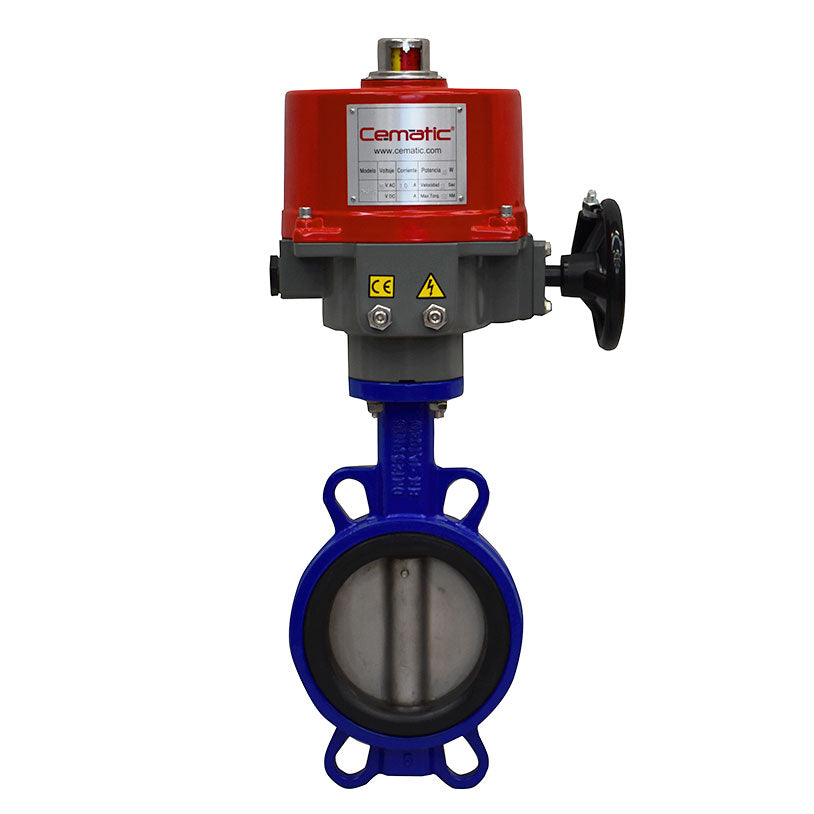
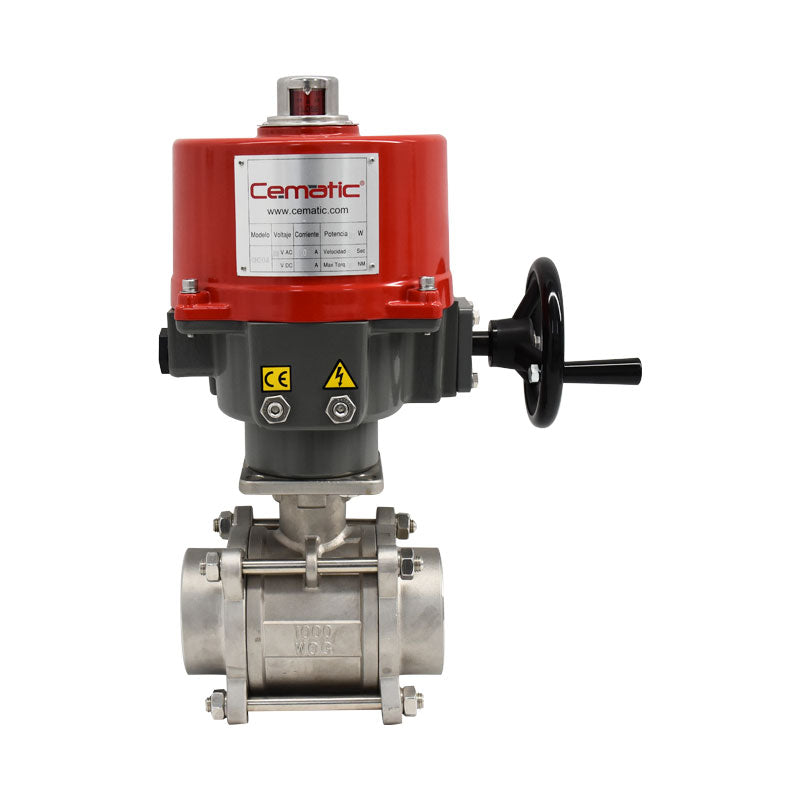
- Cast iron butterfly valve with electric actuator: For automated control of cooling water flow in machine circuits. The electric actuator with 4–20 mA signal allows proportional flow adjustment from the machine's temperature controller, maintaining mold or process temperature within the quality range.
- Ductile iron gate valve: For isolating entire sections of the water circuit during maintenance. Its minimal pressure drop in the open position makes it ideal for large diameter main lines.
- Cast iron swing check valve: Protects cooling water pumps against backflow when the system shuts down. Essential at every centrifugal pump outlet.
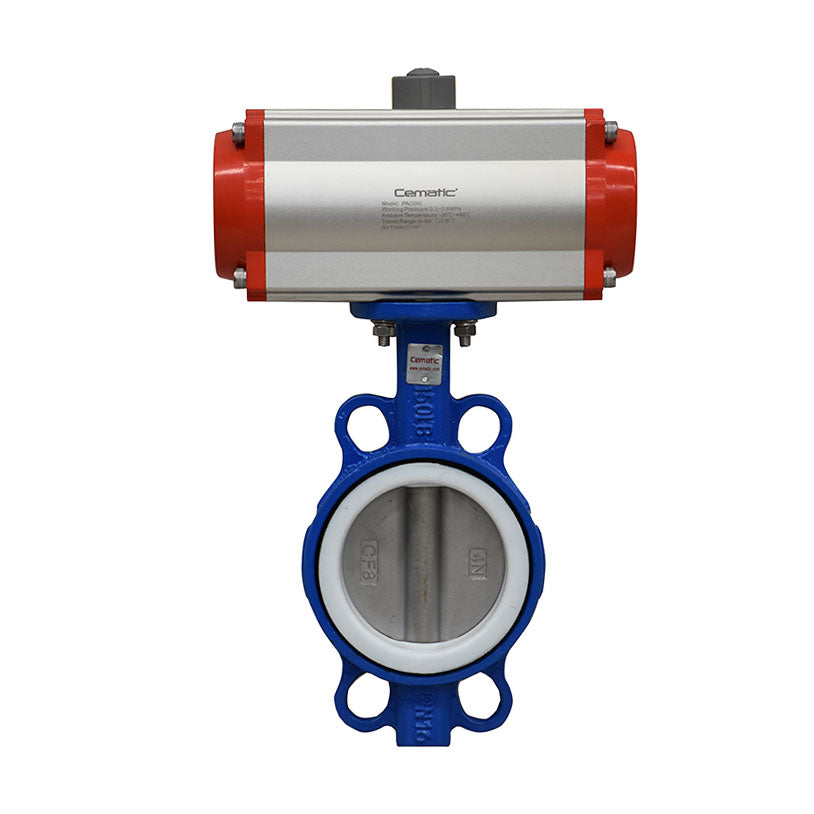
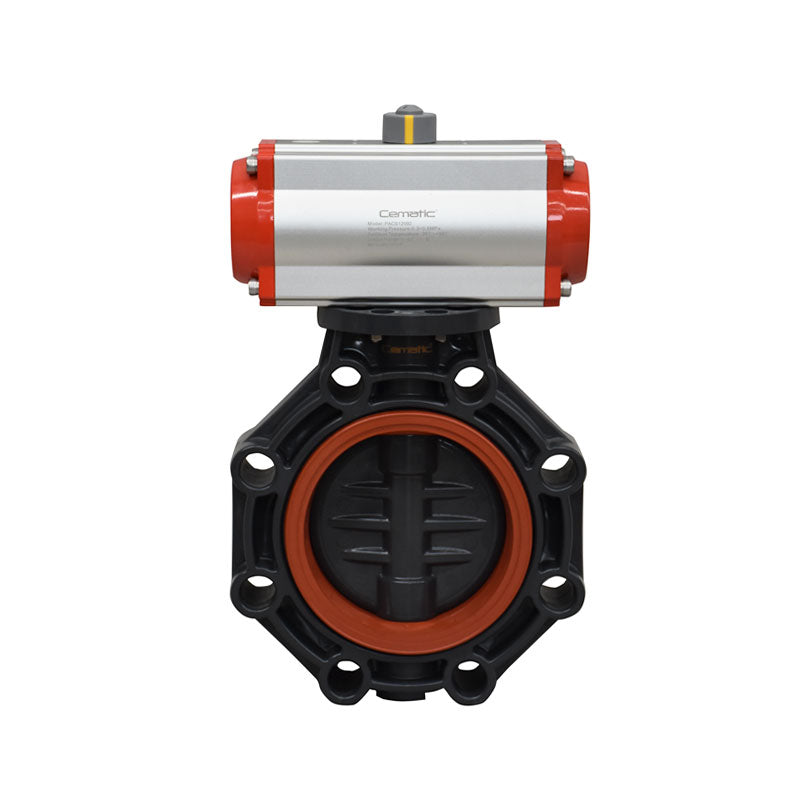
- Butterfly valve with pneumatic actuator: For rapid and automatic sectionalization of cooling water circuits in response to temperature or flow signals from the plant monitoring system.
3. Process Steam
Steam is used in manufacturing for mold heating, material curing (rubber, composites), equipment sterilization, heat generation in surface treatment processes, and space heating systems. Valves in steam systems must withstand high temperatures, handle condensate, and not degrade with continuous thermal cycles.
- SS316 angle seat valve with pneumatic actuator: The most durable solution for steam control in process equipment. The angle seat design with EPDM or PTFE seal tolerates millions of open/close cycles in saturated steam service — significantly exceeding the service life of ball or butterfly valves in the same service. View collection →
- WCB flanged gate valve: For isolating steam distribution headers and main pipes. Visible rising stem for verification of open status during safety rounds.
- WCB or SS316 globe valve: For manual control of steam flow in equipment that does not require automatic control but does need fine temperature adjustment.
- WCB swing check valve: Prevents condensate return to the boiler and protects process equipment from steam pressure loss.
4. Hydraulic Oils and Lubricants
Hydraulic systems for presses, stamping machines, bending machines, and heavy machinery, as well as centralized lubrication systems for assembly lines, require valves compatible with mineral oils at moderate pressures and high operating temperatures.
- SS316 or WCB ball valve with NBR seat: For mineral hydraulic oils and synthetic lubricants in lines up to 4". The NBR (nitrile) seat offers excellent resistance to aliphatic hydrocarbons and mineral oils — do not specify EPDM in oil lines.
- ASTM A105 forged steel ball valve: For high-pressure points in hydraulic systems (100–400 bar) with threaded or socket weld connections. The forged ball valve is the standard in high-pressure industrial hydraulic systems due to its porosity-free body and resistance to cyclic pressure fatigue.
- Spring check valve: To maintain pressure in hydraulic system branches when the pump stops, and prevent oil return through bypass lines.
5. Surface Treatment Fluids
Surface treatment lines — phosphating, degreasing, electrophoretic painting (KTL/E-coat), anodizing, and chroming — handle acidic, alkaline solutions and process chemicals that attack conventional metal valves. This is one of the most corrosive environments in manufacturing, with continuous cycles of immersion in aggressive hot solutions.
- PVC or CPVC ball valve: For zinc phosphating solutions, alkaline degreasers, and rinses at moderate temperatures (up to 60 °C with PVC, up to 93 °C with CPVC). The most economical alternative when chemical aggressiveness does not justify PFA lining.
- PFA anti-corrosive valve: For pickling acids (HCl, H₂SO₄), chroming solutions, and treatments with extreme pH or high temperature where PVC is insufficient. View collection →
- SS316 butterfly valve with pneumatic actuator: For automatic flow control in large volume treatment tanks where large diameter anti-corrosive ball valves are excessively expensive.
6. Industrial Process Gases
Nitrogen for purging and protective atmosphere, CO₂ for refrigeration, argon for TIG/MIG welding, natural gas for furnaces, and oxygen for cutting — industrial gases require valves with total hermetic tightness and materials compatible with each specific gas.
- SS316 NPT threaded ball valve with PTFE seat: The standard for industrial gas distribution in plants. Class VI leak-tightness for ball valves is mandatory — no leakage is acceptable in gas lines.
- Normally closed pneumatic actuated ball valve: For automatic sectionalization of gas lines in response to a leak detector signal or emergency shutdown. The fail-close position ensures that in the event of any control system or air supply failure, the valve closes and cuts off the gas supply.
Manufacturing subsectors and their specific valve needs
Automotive and Auto Parts Industry
The automotive sector in Mexico — Tier 1 and Tier 2 of the main OEMs — operates with the most demanding reliability standards in manufacturing: any line stoppage costs thousands of dollars per minute. Automotive plants require:
- Ball and butterfly valves with pneumatic actuators for cooling water control in welding and painting lines
- Pneumatic angle seat valves for steam control in adhesive, sealant, and undercoat curing lines
- PFA anti-corrosive valves for E-coat (electrophoretic painting), phosphating, and pretreatment lines
- SS316 ball valves for welding gas distribution (Ar, CO₂, N₂) and compressed air for tools
- NAMUR automation kits for retrofitting existing manual valves during line upgrades
Plastics and Rubber Manufacturing
- Cast iron butterfly valves with electric actuators for mold cooling water control in injection molding and extrusion machines
- Pneumatic angle seat valves for steam control in rubber curing and vulcanization lines
- SS316 ball valves for purge gas distribution (N₂) in extrusion lines for moisture-sensitive materials
- PVC ball valves for cooling tower water systems in PVC and polyethylene extrusion plants
Metalworking and Heat Treatment
- WCB gate valves for isolating heat treatment furnaces (quenching, annealing, carburizing) in natural gas lines
- Forged steel ball valves for hydraulic systems of high-pressure presses, stamping machines, and bending machines
- Anti-corrosive valves for acid pickling and surface treatment lines prior to painting or galvanizing
- Check valves for protecting nitrogen compressors and controlled atmosphere systems in furnaces
Electronics and Precision Manufacturing
- Miniature SS316 ball valves (DN10–DN25) for deionized water (DI water) and ultrapure water (UPW) process lines in component cleaning processes
- Diaphragm valves for etching and cleaning fluids in PCB and semiconductor component manufacturing
- PFA valves for distribution of cleaning acids (IPA, diluted H₂SO₄, ultra-diluted HF) in cleanrooms
- IP67 electric actuators for automation in humidity-controlled environments and compressed air restrictions in cleanroom areas
Food and Beverage in Manufacturing Environment
For processed food manufacturing plants, please refer to our specialized category: Valves for Food Industry →
Automation for manufacturing — integration with PLC and plant control systems
Modern manufacturing operates under the Industry 4.0 paradigm: every control point must be monitorable and actionable from the plant's SCADA system or the production MES. Cematic's automated valves integrate directly with the most common PLCs in the Mexican manufacturing industry:
- Allen-Bradley / Rockwell Automation: 24 VDC digital outputs compatible with standard solenoids. Digital inputs for limit switch signals. Modbus RTU or EtherNet/IP communication with advanced electric actuators.
- Siemens S7 (S7-300, S7-1200, S7-1500): Direct interface with digital output modules for solenoids and analog input modules for 4–20 mA signals from positioners and modulating electric actuators.
- Mitsubishi MELSEC: Compatibility with standard ON/OFF and 4–20 mA analog signals from Cematic range electric actuators.
- Temperature and process controllers: Electric actuators with 4–20 mA signals connect directly to the analog output of any PID temperature or flow controller, without an intermediary PLC — simplifying integration in individual machines.
The most important selection criterion in manufacturing: total cost reliability
In manufacturing, the cost of a valve is not just its purchase price — it's the total cost that includes installation, maintenance, spare parts, and the cost of production downtime caused by its failure. A low-cost valve that fails every 6 months and stops the line for 2 hours for replacement can have a total cost 10 times higher than a quality valve that operates maintenance-free for 5 years. At Cematic, we help our clients identify the correct quality level for each application — not to over-engineer where it's not necessary, and not to economize where reliability is critical.
Manufacturing industries we serve
- Automotive and auto parts (Tier 1 and Tier 2) — Guanajuato, Puebla, Nuevo León, State of Mexico
- Plastics, rubber, and composites manufacturing
- Metalworking, stamping, and heat treatment
- Electronics, semiconductors, and precision manufacturing
- Furniture, wood, and building materials manufacturing
- Textile and apparel industry
- Industrial packaging, bottling, and wrapping
- Cleaning products and personal care manufacturing
Why choose Cematic for your manufacturing plant?
We understand that downtime is the number one enemy of manufacturing. That's why we keep readily available stock in Mexico City for high-rotation valves and actuators, with delivery times of 1 to 3 business days for most orders. Our technical team advises on the correct selection for each plant service and provides a formal quote on the same business day. For plant expansion projects or line changes, we perform a technical review of the valve list at no cost. Shipping throughout the Mexican republic. Contact us via WhatsApp or at ventas@cematic.com.