
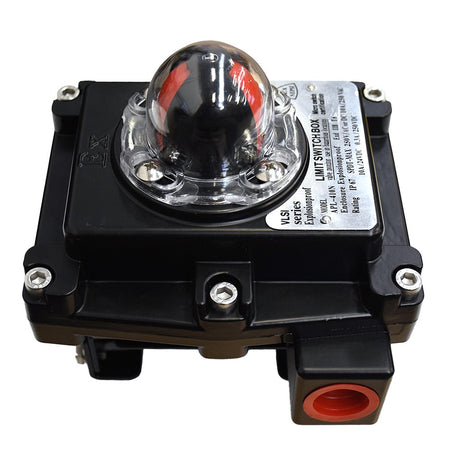
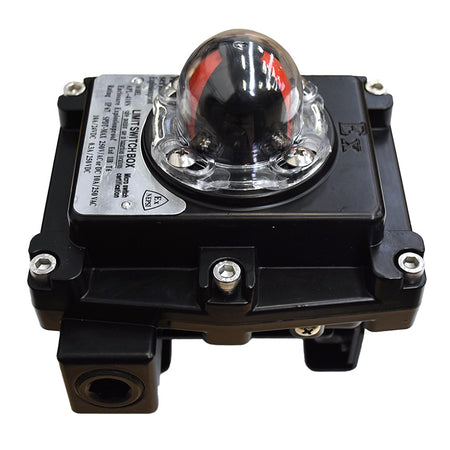
Explosion-Proof Limit Switch for Pneumatic Actuator | ATEX IECEx CSA | EXDIIBT4 | 250V
Pickup availability could not be loaded
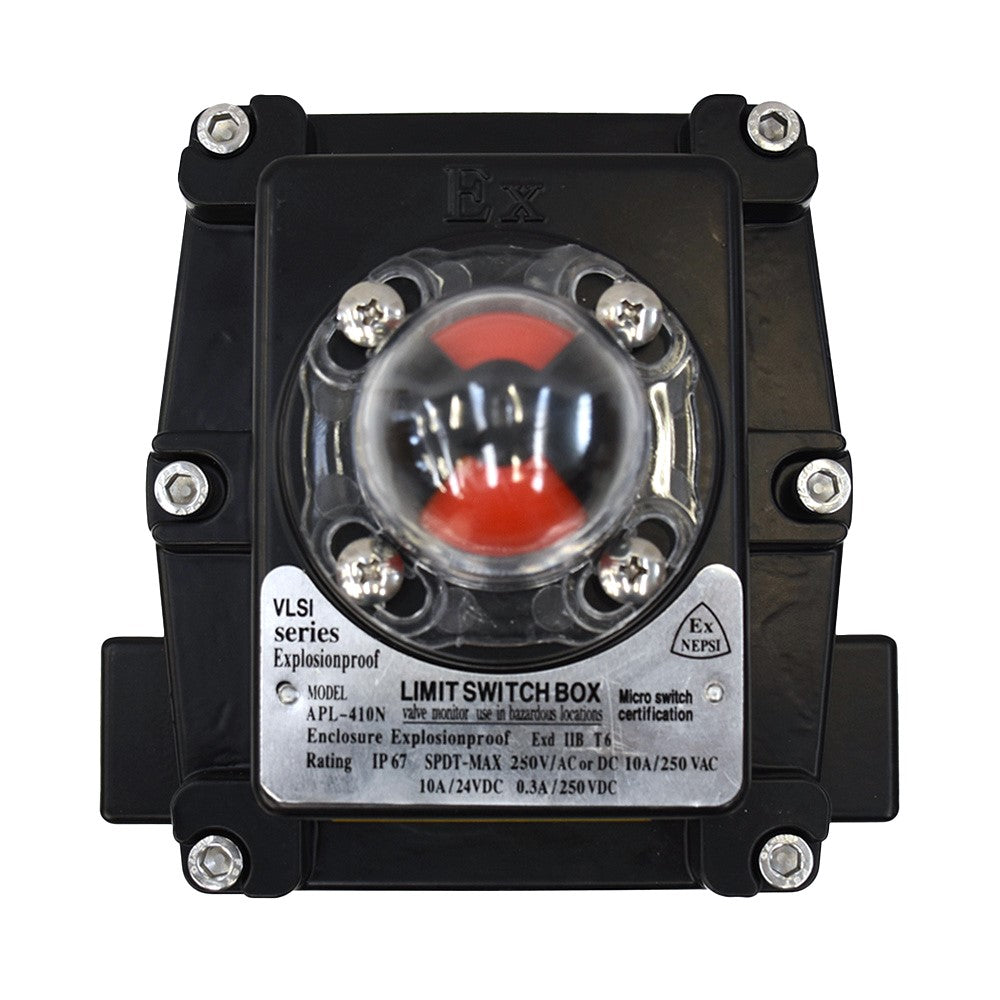
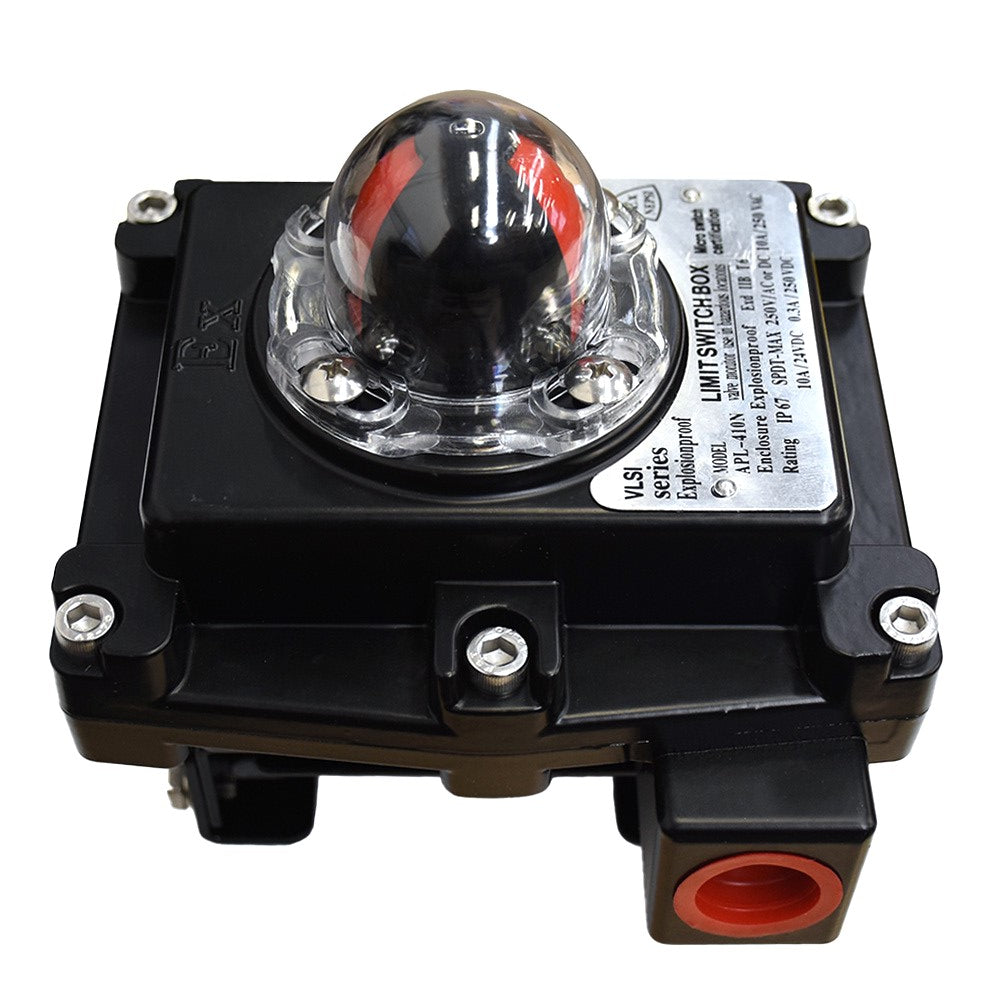
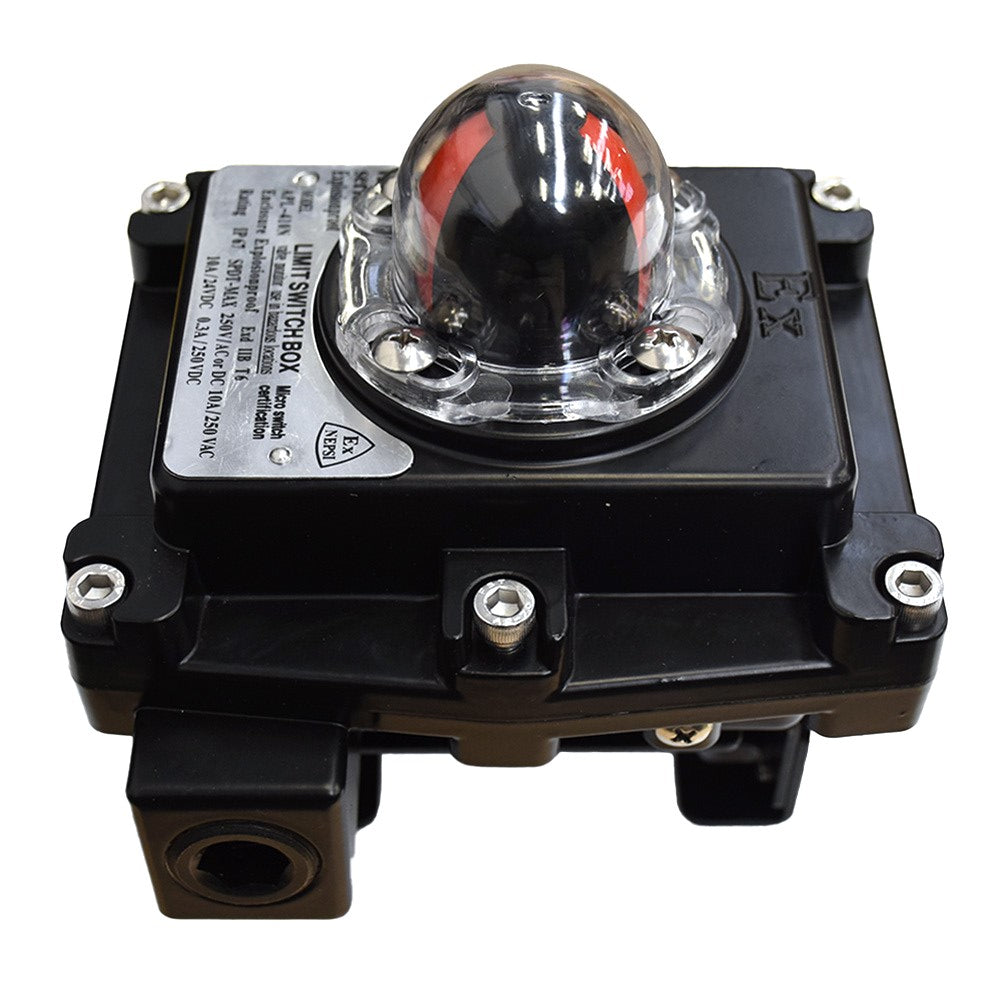
Explosion-Proof Limit Switch for Pneumatic Actuator — ATEX, IECEx and CSA, EXDIIBT4, 250V, for confirming position in classified areas
Cematic's explosion-proof limit switch for pneumatic actuators detects and signals the position of the pneumatic actuator — fully open or fully closed — in facilities with the risk of explosive atmospheres.
Unlike positioners that control the actuator's position using a continuous signal, the limit switch only detects the two end positions of the stroke: valve completely open and valve completely closed.
Upon reaching either of these positions, the mechanical switch signals the PLC or control system that the actuator has reached the limit, as this is the information the system needs to continue the process sequence. The EXDIIBT4 certification — explosion-proof enclosure — enables installation in Zones 1 and 2 with Group IIB gases.
Why the limit switch is different from the positioner — and when it is the correct specification
The limit switch and the positioner are two different accessories for pneumatic actuators. Confusion between the two is common, as both are mounted on the actuator and connected to the control system. However, their functions are completely different:
- Limit switch — for ON-OFF systems where the PLC needs position confirmation, as without it cannot advance the sequence: In all-or-nothing control systems, the PLC sends the open or close signal and waits for confirmation from the switch to continue with the next step of the sequence. Without that confirmation, the system does not know if the valve reached the correct position.
Therefore, it may advance with the valve in the wrong position or wait indefinitely. The limit switch provides that physical confirmation of the actuator's position.
- Positioner — for proportional control where continuous positioning is required, as the switch only detects the ends of the stroke: The positioner regulates the actuator's position at any point between 0% and 100% open. It is the correct accessory in PID control loops where the valve acts as the final control element.
The limit switch, on the other hand, cannot perform that function as it only detects the two ends of the stroke.
- Both accessories together — since they are used simultaneously in many facilities: In control valves with a positioner, it is common to also install a limit switch to confirm the ends of the stroke. The positioner regulates the position during modulation. The switch also confirms when the valve reaches the ends of the stroke.
EXDIIBT4 — how enclosure protection works, as it defines the zones and gases where it is valid
The EXDIIBT4 certification defines the type of protection, the gas group, and the temperature class of the switch. The implications of that certification are described below, as each part of the marking defines a limit for correct installation:
- EX d — explosion-proof enclosure, since it contains any spark or arc inside the housing: The mechanical switch of the switch generates a small arc every time it operates. The metal housing seals that arc and prevents it from igniting the external atmosphere. Therefore, the switch can operate in areas with flammable gases without risk of ignition.
- Group IIB — suitable for most industrial gases, although not for hydrogen: Group IIB covers the most common gases in the petrochemical and chemical industries: ethylene, propylene, butadiene, and most hydrocarbons. It is the correct specification in refineries, gas plants, and petrochemical plants where those gases are present, although Group IIC is required for processes with hydrogen.
- T4 — maximum surface temperature of 135°C, suitable for most industrial gases: The T4 class guarantees that the external temperature of the switch does not exceed 135°C under any operating condition. The operating ambient temperature ranges from -25°C to 85°C, which is why it is the correct specification in most industrial environments.
Technical specifications that define the installation limits of the explosion-proof limit switch
| Parameter | Value |
|---|---|
| Switch type | Mechanical |
| Function | Detection of open and closed position of the actuator |
| Ex certification | EXDIIBT4 — explosion-proof enclosure |
| Certifications | ATEX — IECEx — CSA |
| Enabled zones | Zone 1 and Zone 2 — Group IIB gases and vapors |
| Maximum voltage | 250V AC/DC |
| Minimum voltage | 24V DC |
| Conduit connection | 3/4" NPT |
| Ambient temperature | -25 °C to +85 °C |
| Position indicator | Visual — range 0° to 90° |
| SKU | PASCEX02 |
Limit switch vs. positioner — comparison table to select the correct accessory although both go on the actuator
| Criterion | Limit switch ← This product | Electropneumatic or smart positioner |
|---|---|---|
| Main function | ✅ Confirms that the actuator reached the full open or closed position | Regulates the position of the actuator at any point in the stroke |
| Compatible control type | ✅ ON-OFF — fully open or fully closed | Proportional — 0% to 100% open |
| Signal to the PLC | ✅ Digital — open or closed contact depending on position | Analog 4-20 mA or digital depending on the model |
| Operating voltage | ✅ Up to 250V AC/DC — can switch loads directly | 4-20 mA control signal — does not switch power loads |
| Ex certification | ✅ EXDIIBT4 — ATEX, IECEx and CSA | Varies depending on the model — check the positioner certification |
| Relative cost | ✅ Lowest in the actuator accessory family | Higher — justified when proportional control is required |
| Joint installation | ✅ Compatible — can be installed together with a positioner on the same actuator | ✅ Compatible — can also coexist with the limit switch |
Main applications of the explosion-proof limit switch where position confirmation is a requirement
- Position confirmation of pneumatic valves in ON-OFF control systems with classified areas: In process sequences where the PLC needs to confirm that the valve reached the correct position before continuing, the limit switch provides that confirmation directly and reliably.
The ATEX/IECEx/CSA certification also enables its installation in the classified process zones where the valves operate.
- Petrochemical industry and refineries where shutoff valves operate in Zone 1 and Zone 2 areas: In refinery and petrochemical plant process units, line shutoff valves open and close in response to process conditions or emergency signals.
The switch confirms the position to the control room. Remote confirmation is, given that access to the classified area is restricted, a safety requirement.
- Gas distribution systems where the incorrect position of the valve is a safety risk: In natural gas and LPG networks, the limit switch signals the position of each shutoff valve to the SCADA system. Consequently, the operator can verify from the control room if all valves are in the correct position, especially during emergency or maintenance maneuvers.
Applications in automatic sequences and classified zones where the switch is also a regulatory requirement
- Continuous process plants where sequence automation requires position confirmation: In automatic start-up, shutdown, and filling sequences, the PLC advances from one step to the next only when the switch confirms that the valve reached the correct position.
Without that confirmation, the system would wait indefinitely or advance with the valve in the wrong position. Therefore, the limit switch is a standard component in that type of automation.
- Classified areas of the chemical industry, mining, and power generation where a certified accessory is required: In any facility with Zone 1 or Zone 2 where monitoring of pneumatic actuator position is needed, this switch is the correct specification. The triple certification ATEX, IECEx, and CSA also covers the regulatory requirements of Mexico, Europe, and North America in a single component.
For the full range of actuator accessories, see accessories for pneumatic actuators →